When heating a superconductor makes it stronger
Our understanding
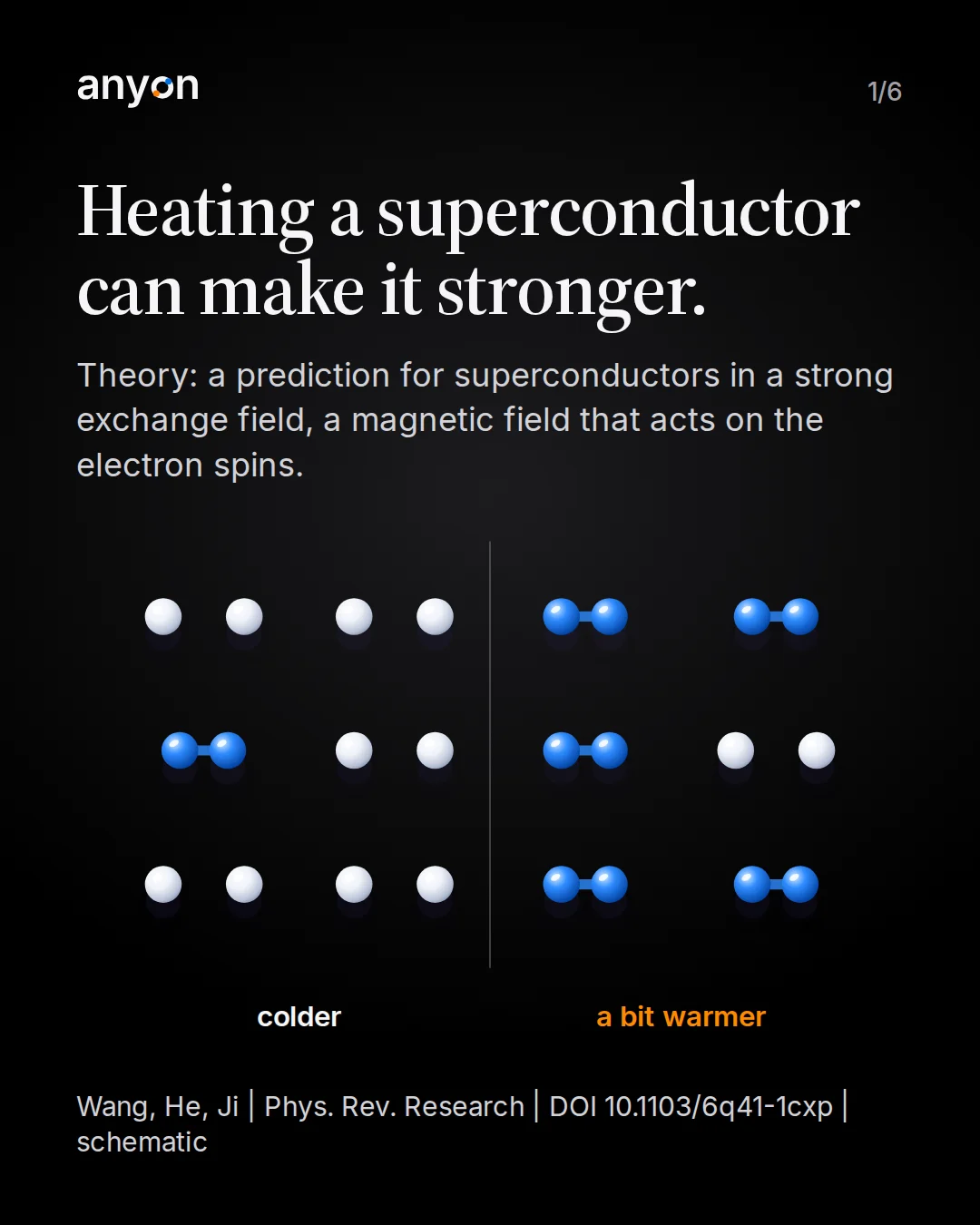
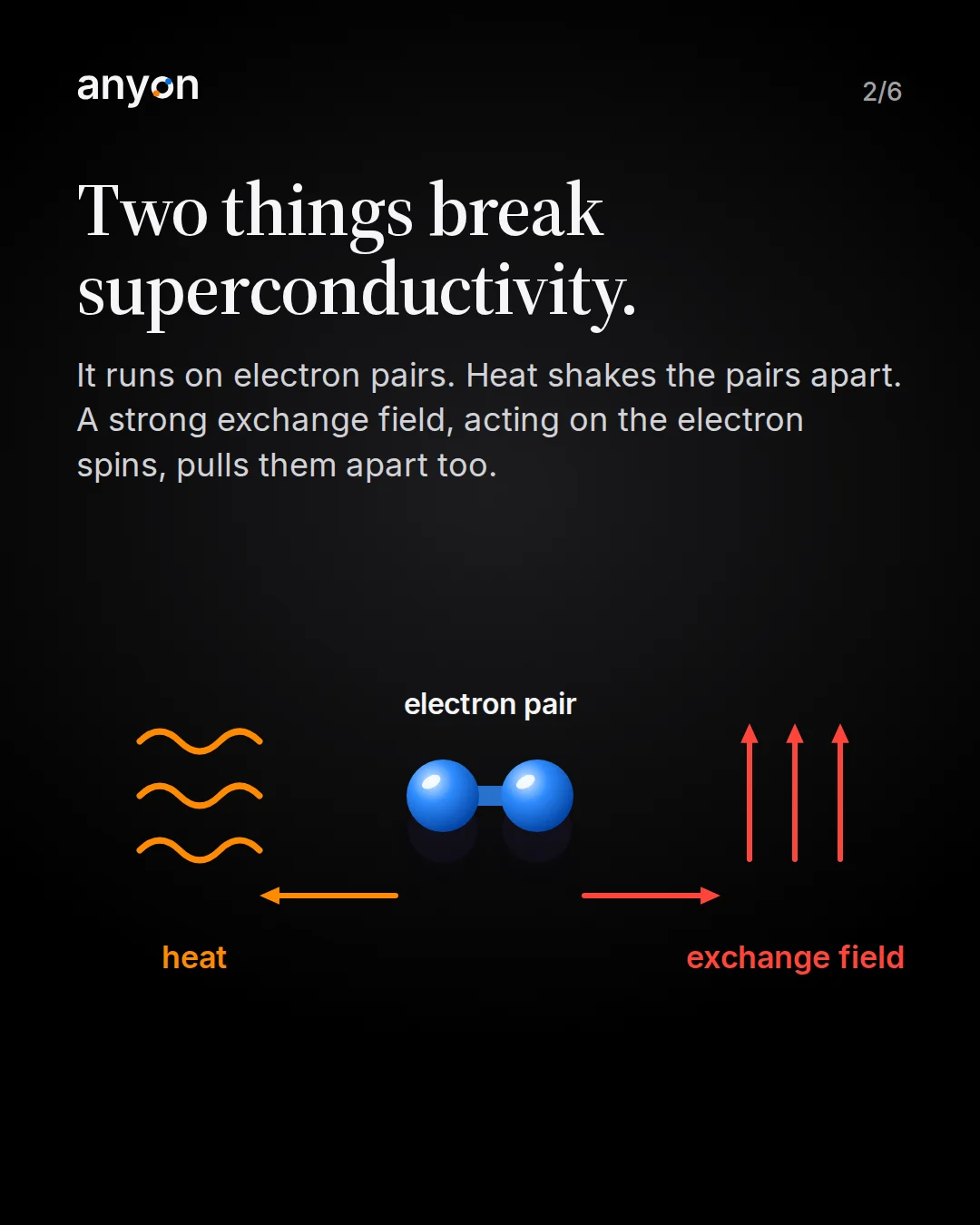
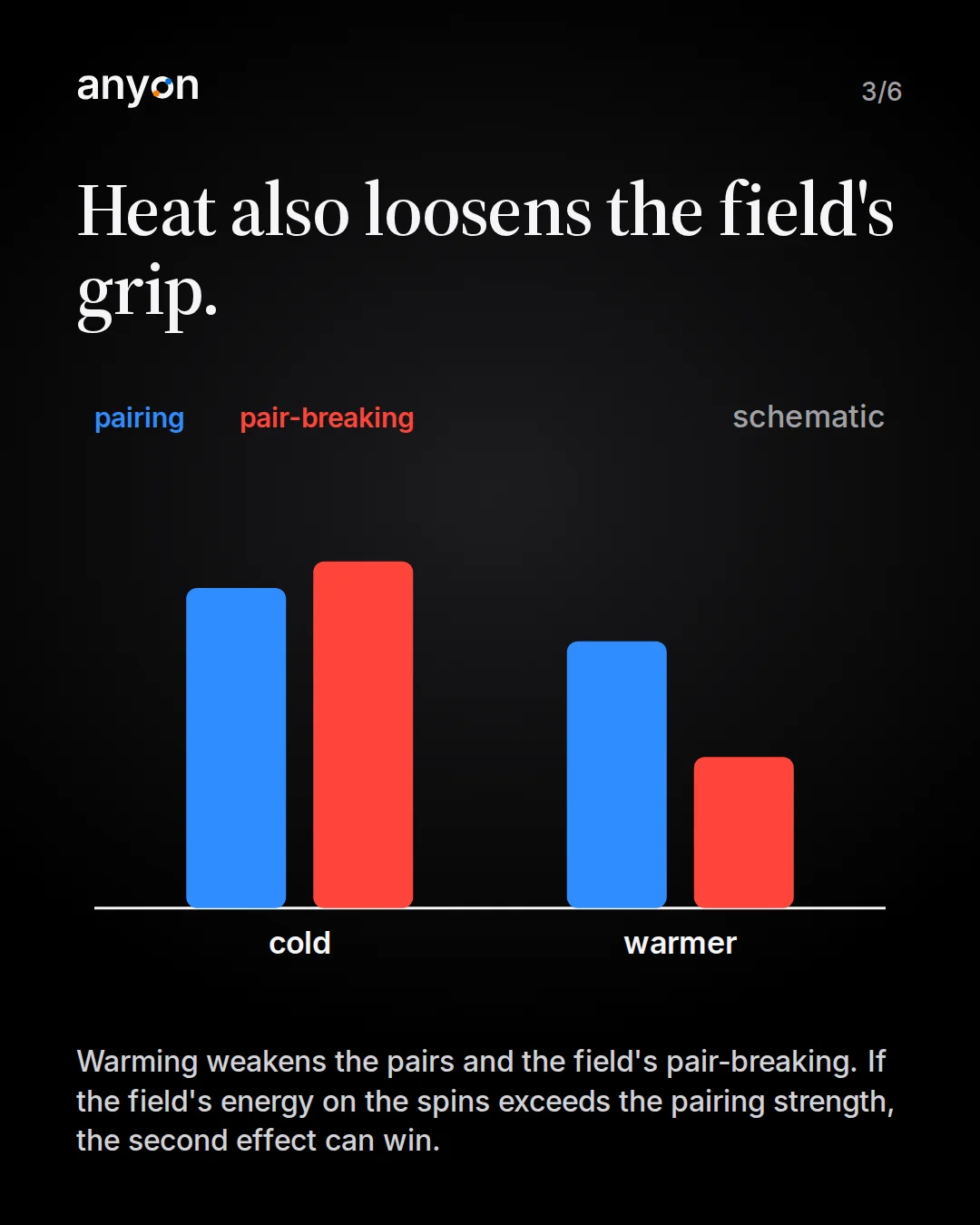
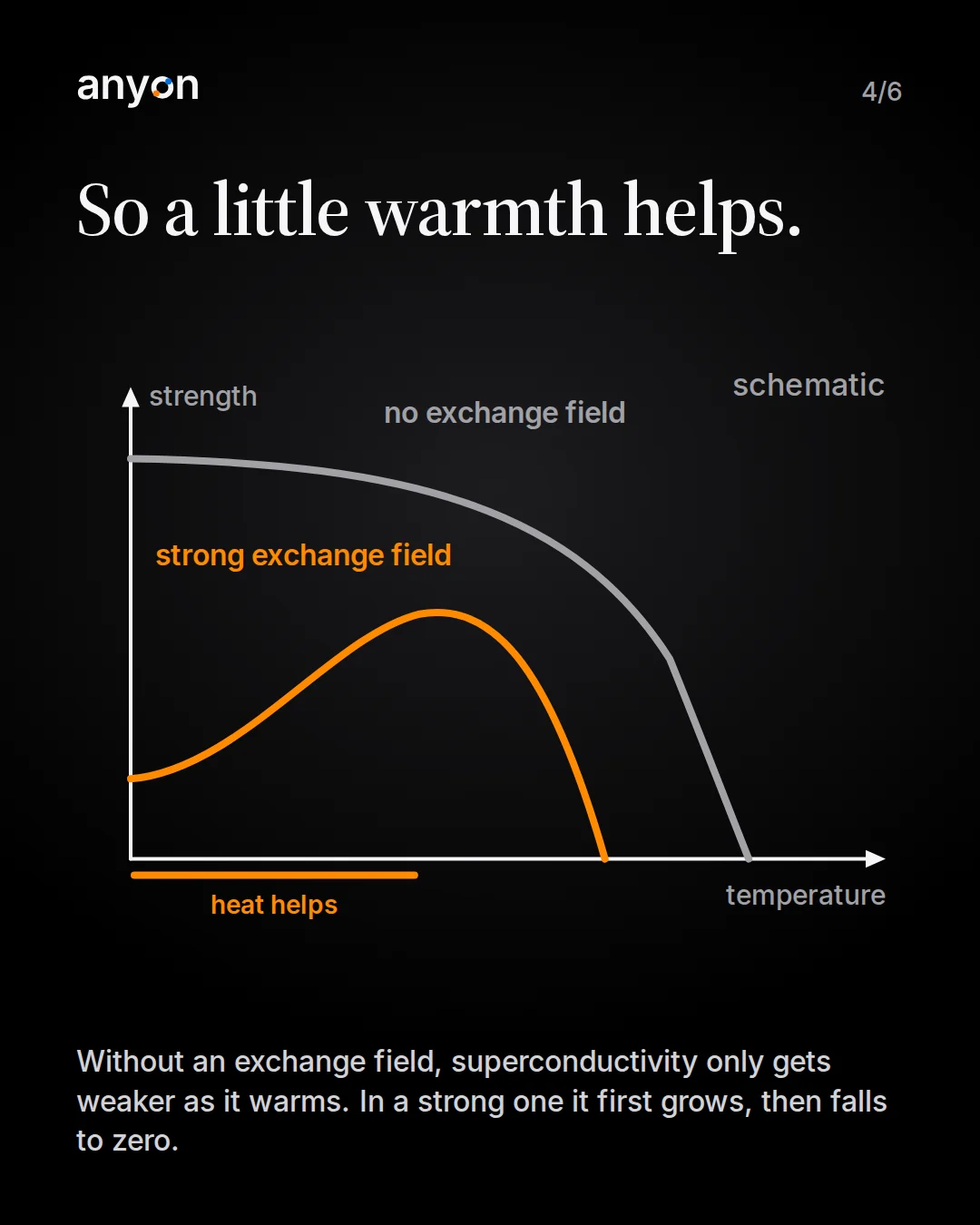
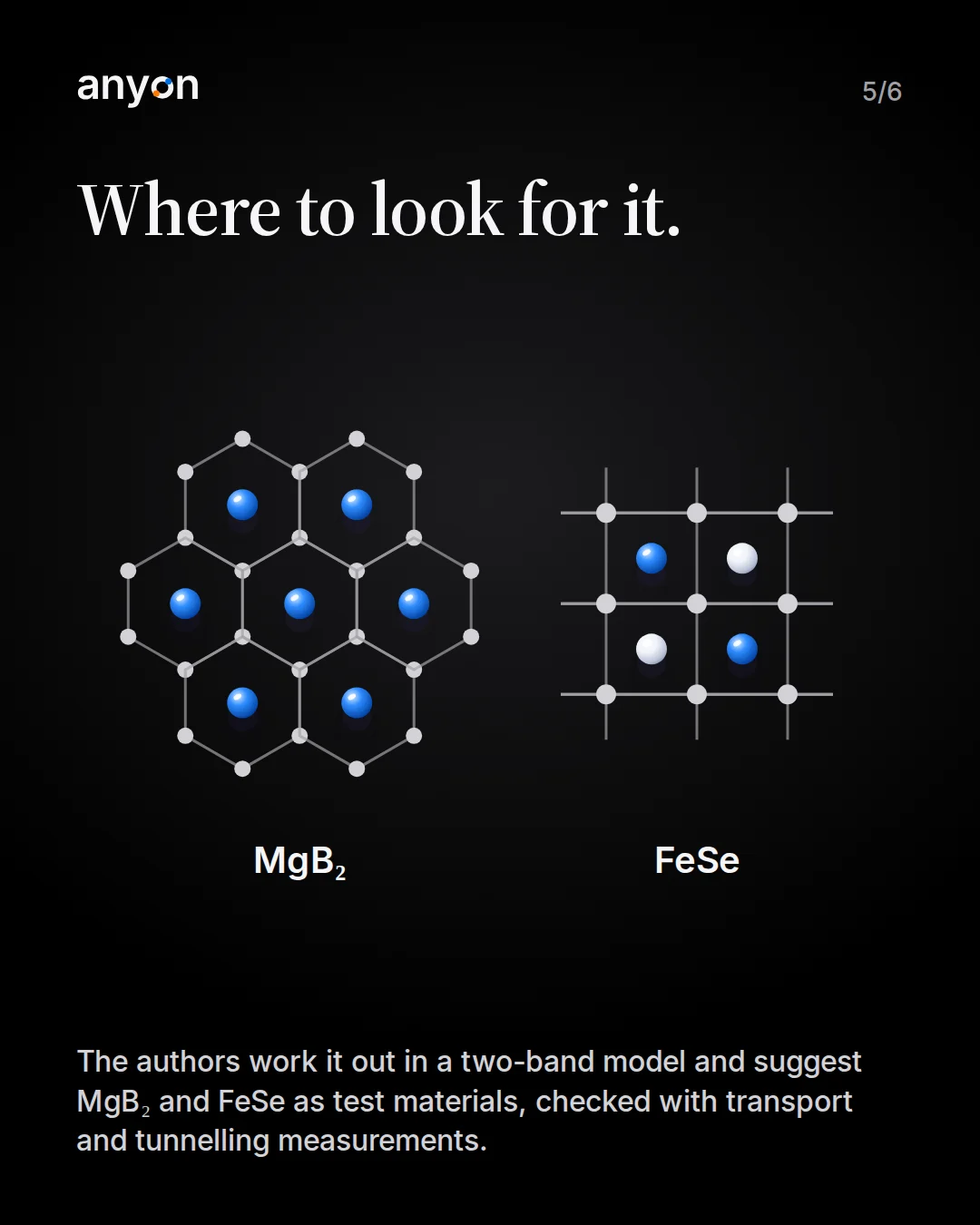
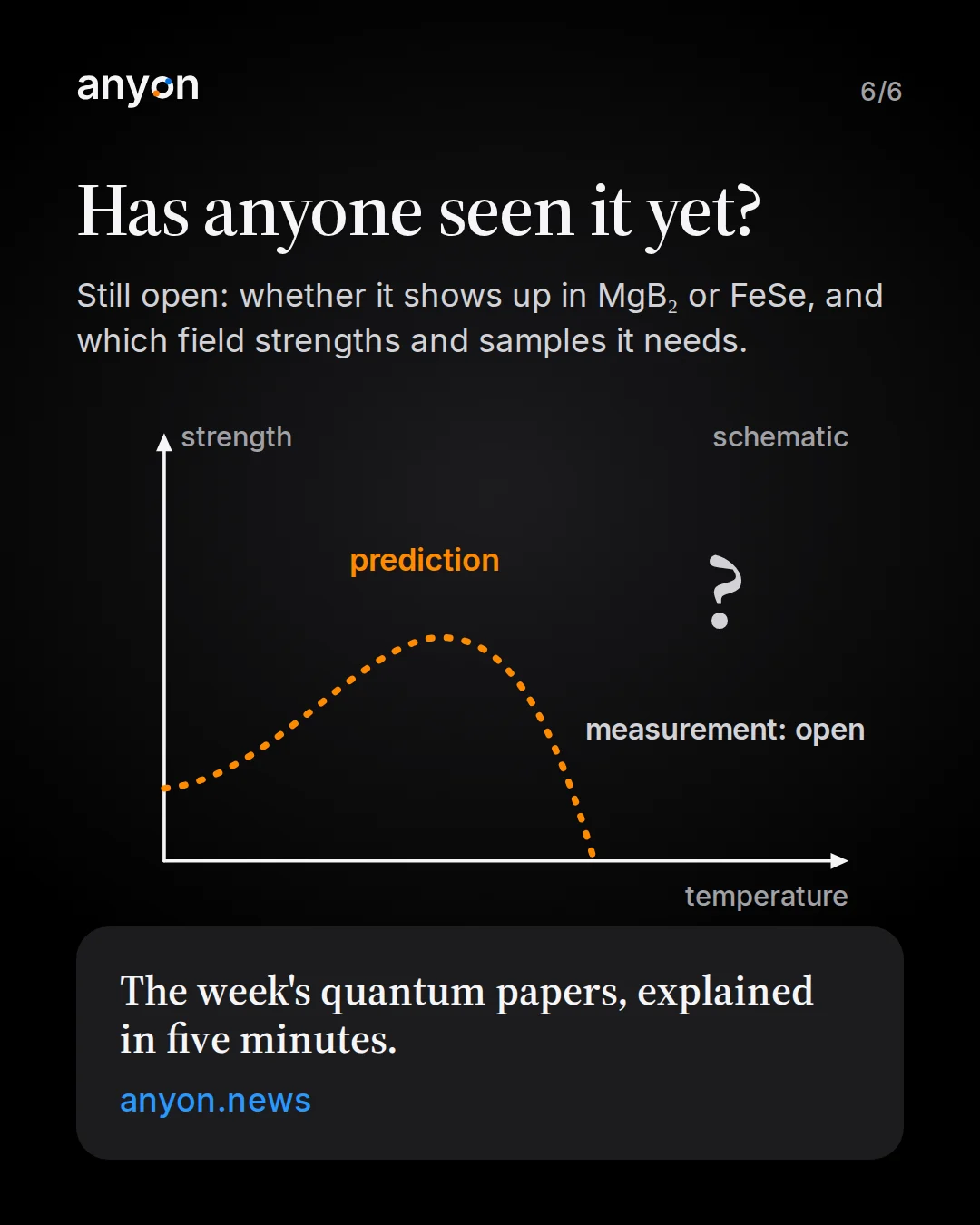
Superconductors carry electricity without any loss, and heat normally destroys this. A strong magnetic influence destroys it too, by breaking up the electron pairs that carry the current. The authors calculate that under such a strong influence, warming weakens the pair-breaking more than the pairs themselves. Then a little heat makes the superconductor stronger, not weaker. They name two materials, MgB₂ and FeSe, in which this could be tested. It is a prediction, not yet a measurement.
A few papers like this every Monday, free.
Free, with sponsor ads. Unsubscribe anytime. Privacy
The details
What they did
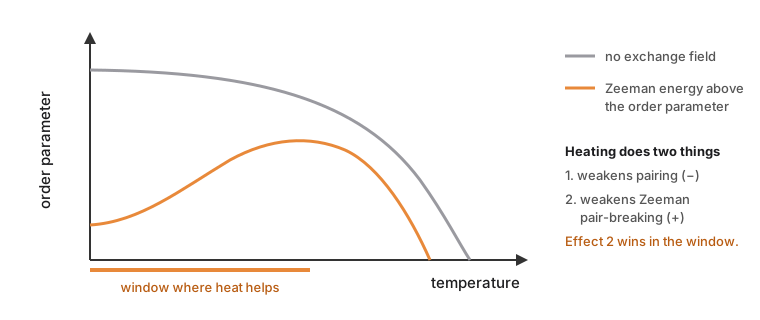
Heat normally destroys superconductivity. A strong exchange field, the magnetic field felt by the electron spins, also destroys it, by pulling apart the electron pairs that carry the supercurrent (the Zeeman effect). The authors analysed the free energy of a superconductor in such a field and found that temperature does two things at once: it weakens the pairing, but it also weakens the field’s pair-breaking. When the Zeeman energy is larger than the superconducting order parameter, the second effect can win, so that warming the material up makes it more superconducting, giving a non-monotonic temperature dependence. They propose a multiband mechanism as one microscopic route, show it explicitly in a two-band model, and suggest that the effect could be observed in MgB₂ and FeSe by transport and tunnelling measurements.
Why it matters
It is a clean, counter-intuitive prediction with a concrete experimental recipe. Large exchange fields arise, for example, when a thin superconductor is placed next to a magnetic material, a configuration that appears in several hybrid quantum devices. (The last sentence is our inference; the paper’s abstract names only the materials, not device contexts.)
What is still open
Has a non-monotonic temperature dependence of this kind been seen in MgB₂ or FeSe, and what field strengths and sample geometries would be needed to see it?