An energy gap that keeps many-level spins squeezed together
Our understanding
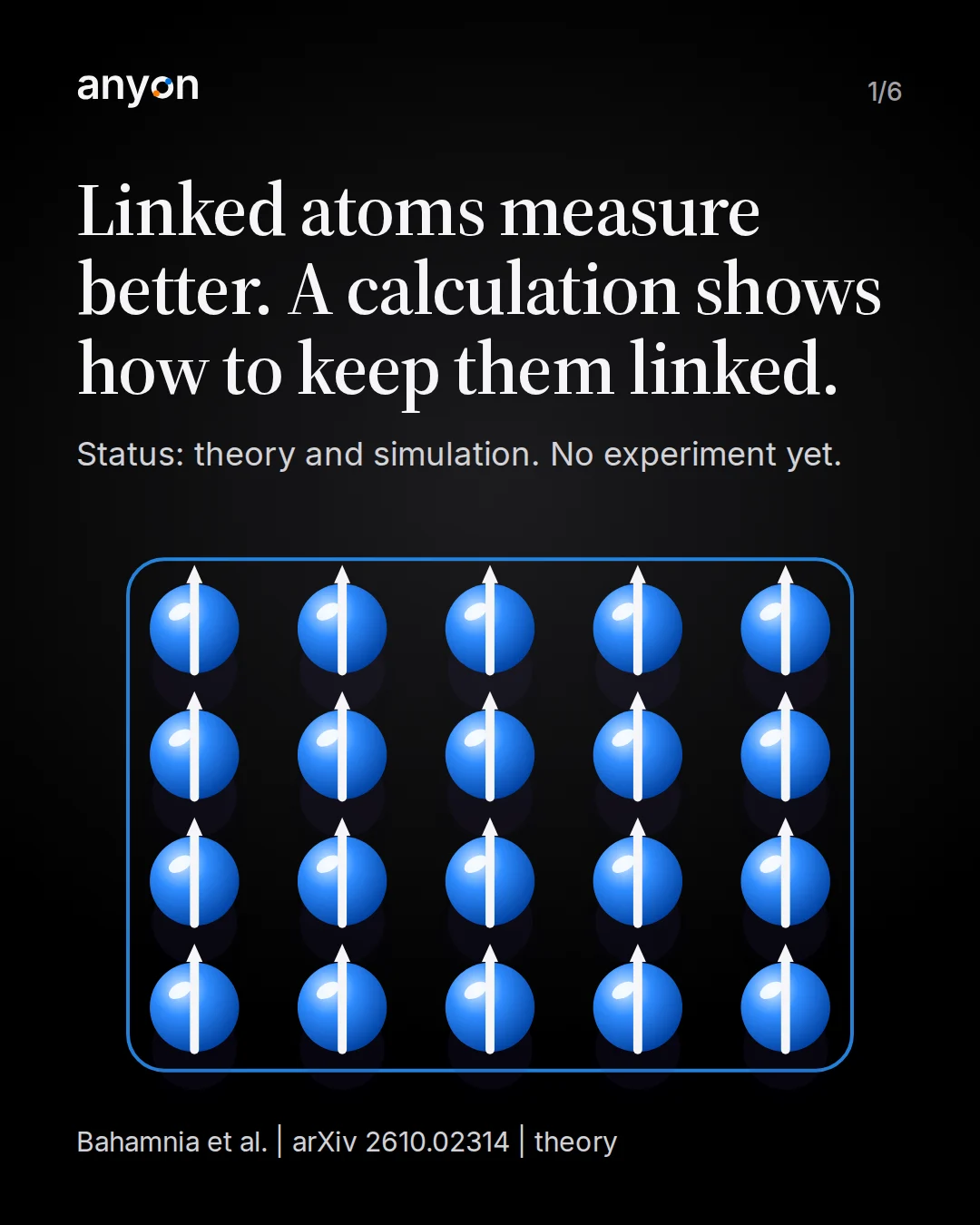
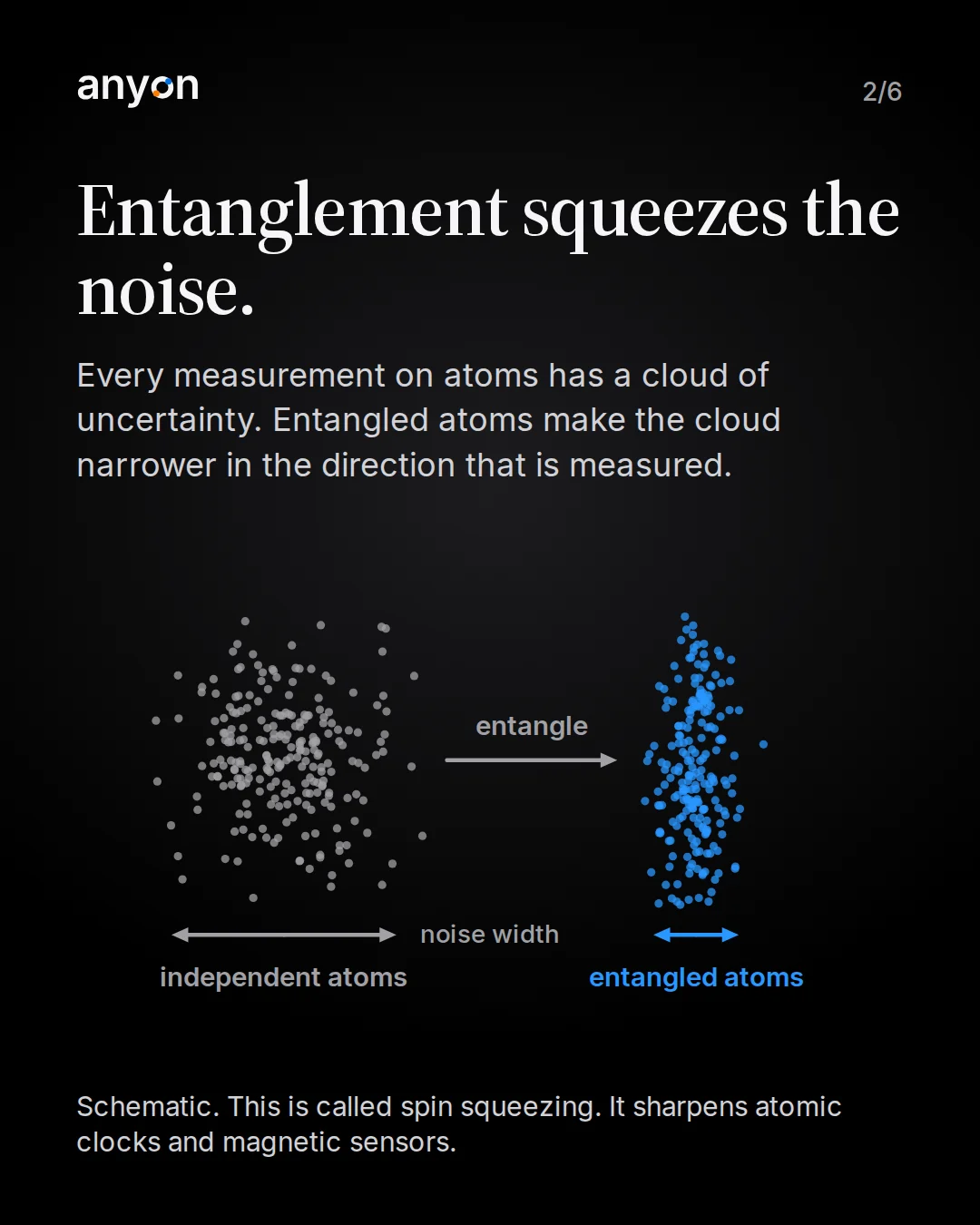
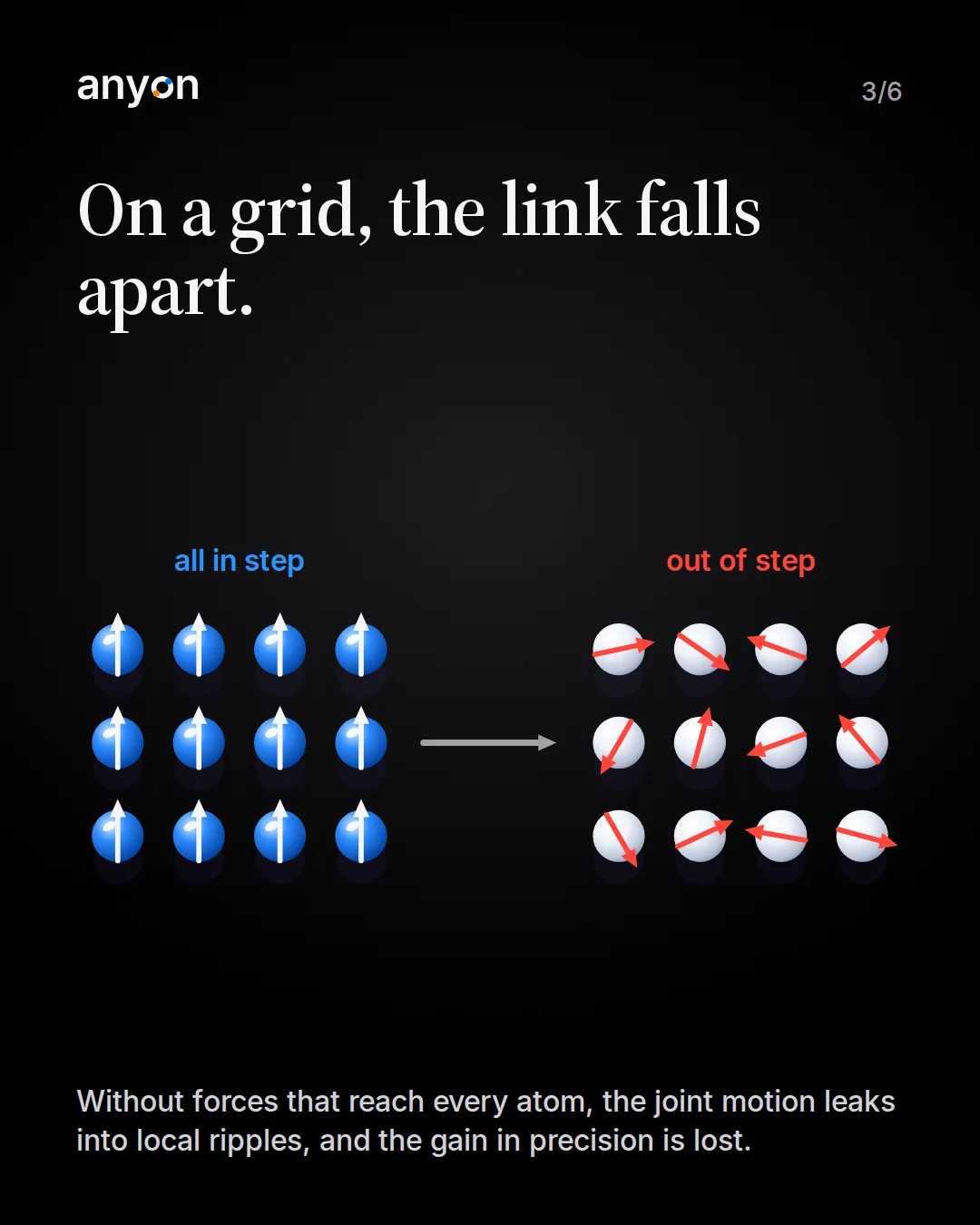
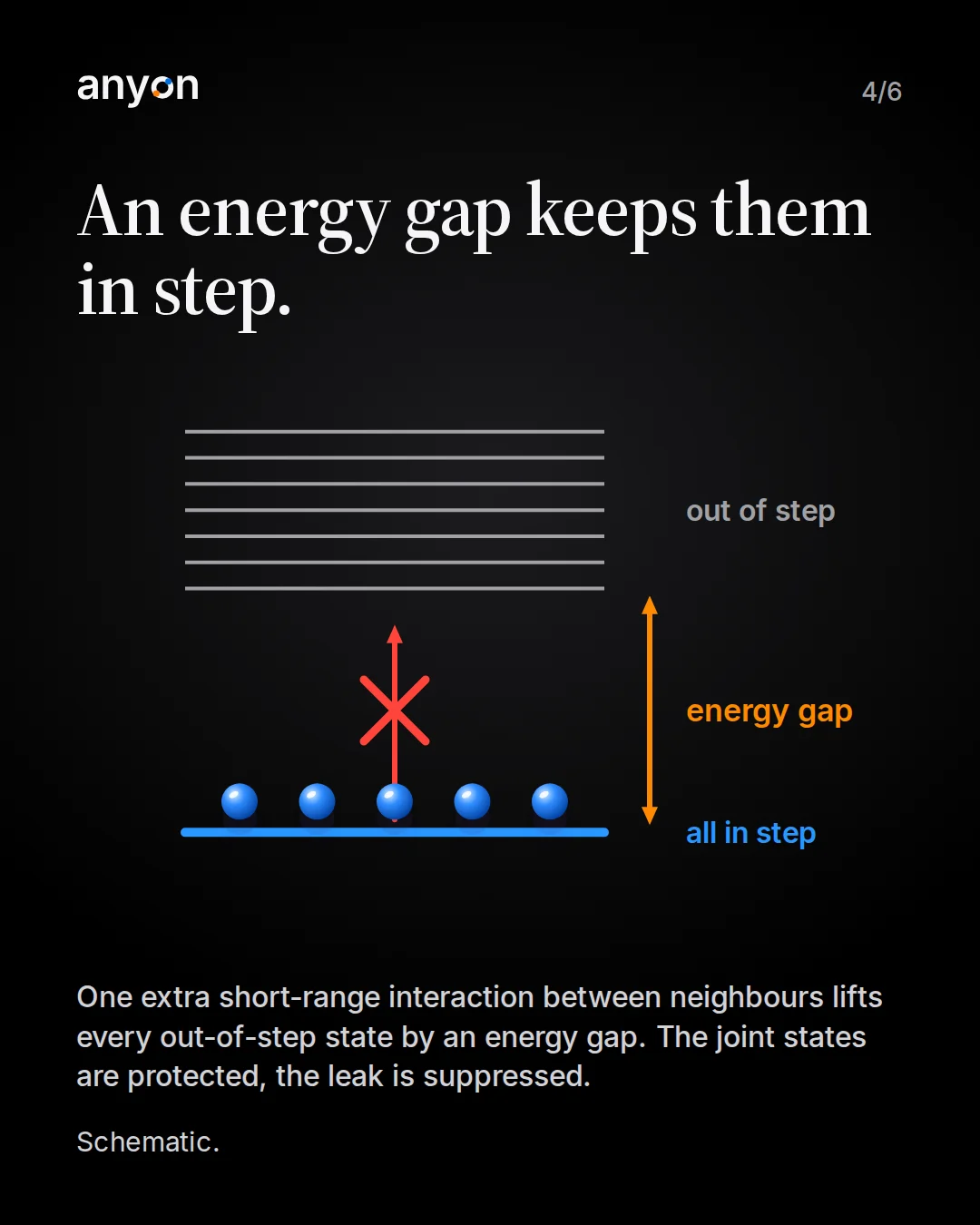
Atomic clocks and magnetic sensors become more precise when their atoms are linked so that they act as one. With many atoms on a grid, this linking usually falls apart, because each atom mostly feels its close neighbours. The authors show that one extra short-range interaction creates an energy barrier that keeps the atoms in step. Then precision grows at the fastest rate physics allows as more atoms are added. This is a calculation. Experiments are still to come.
A few papers like this every Monday, free.
Free, with sponsor ads. Unsubscribe anytime. Privacy
The details
What they did
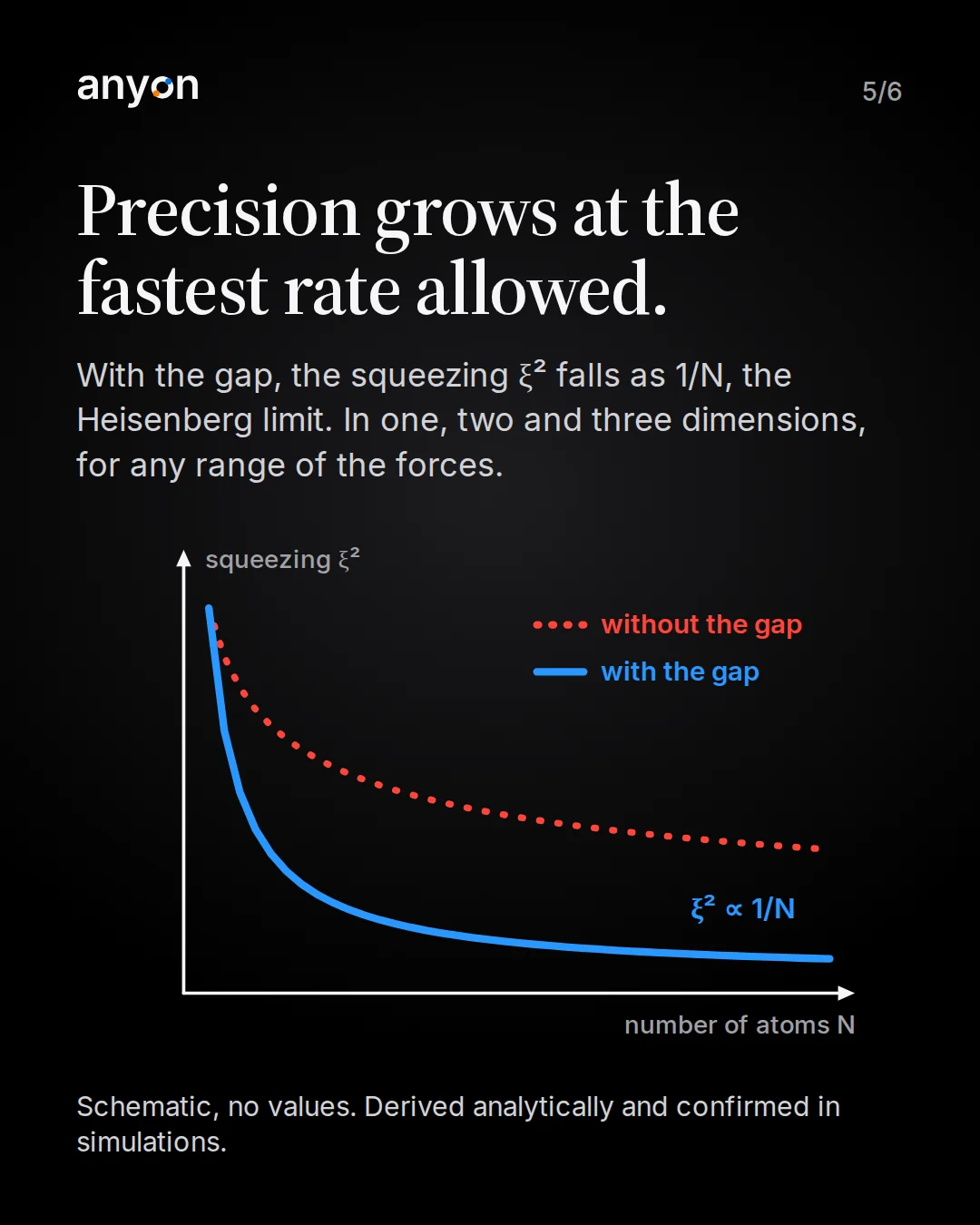
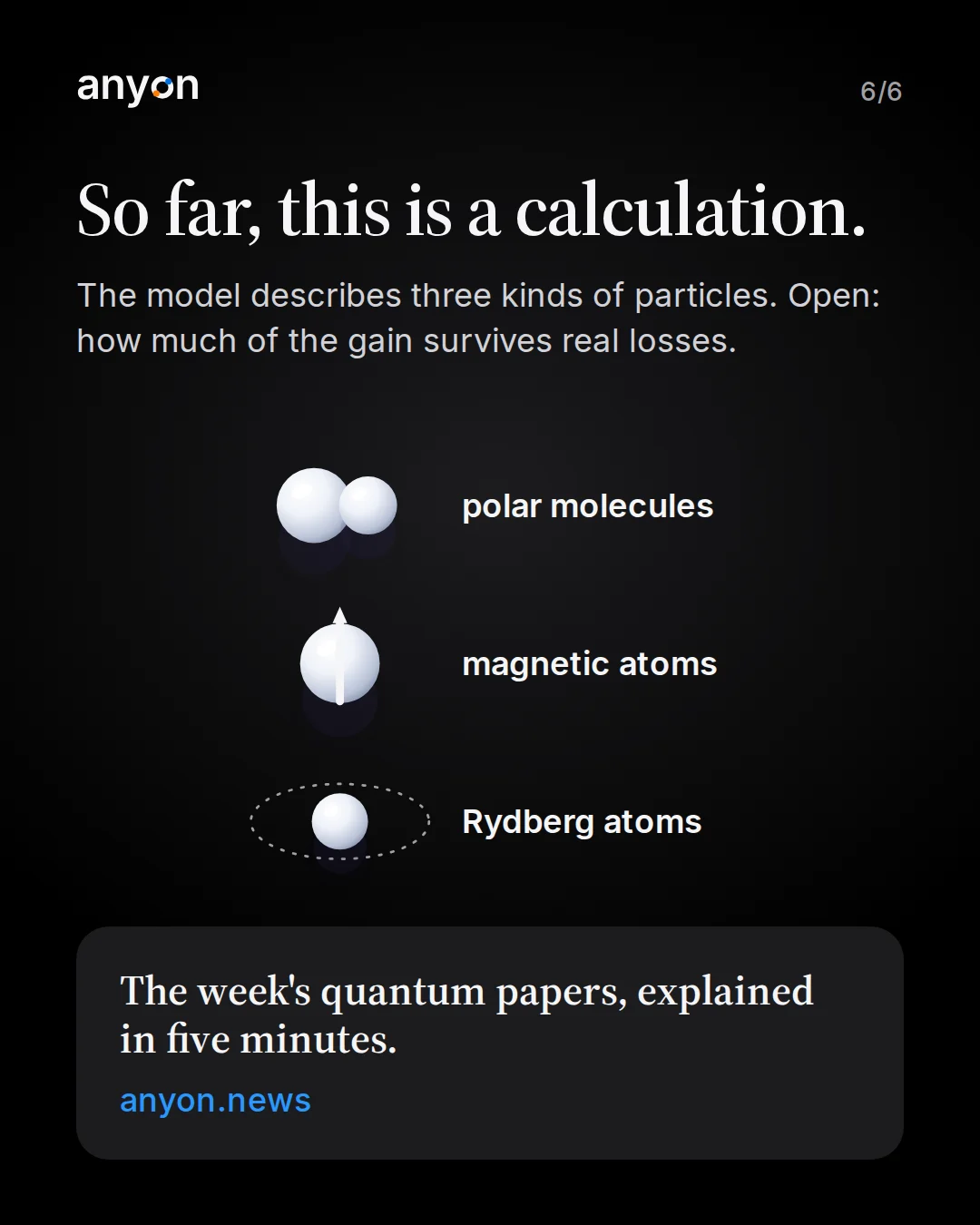
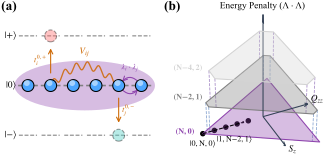
Spin squeezing entangles many spins so that a measurement, for example in an atomic clock or magnetometer, becomes more precise than with independent particles; the best possible scaling with particle number N is the Heisenberg limit. The authors study spins with more than two levels (qudits) that interact through power-law forces on a lattice, a setting that describes polar molecules, magnetic atoms and Rydberg atoms. Without all-to-all interactions the squeezing dynamics normally leaks into non-collective modes and the Heisenberg scaling is lost. They show that adding local su(D) exchange interactions opens an energy gap that protects the collective states, suppresses the leakage, and restores Heisenberg scaling, ξ² ∝ 1/N, in one to three dimensions for any power-law exponent. The mechanism is derived analytically from the excitation spectrum and confirmed by numerical simulations.
Why it matters
It gives a general recipe for metrologically useful entanglement in realistic lattice platforms, extending spin-nematic squeezing from spinor Bose–Einstein condensates to spatially extended systems, and it generalises to larger internal spin dimensions. This is theory and simulation.
What is still open
Which of the named platforms can engineer the required local exchange interactions first, and how much of the predicted scaling survives real-world loss and dephasing? (our inference)