Who is allowed to forget? Entanglement as the key to erasing a quantum memory cheaply
Our understanding
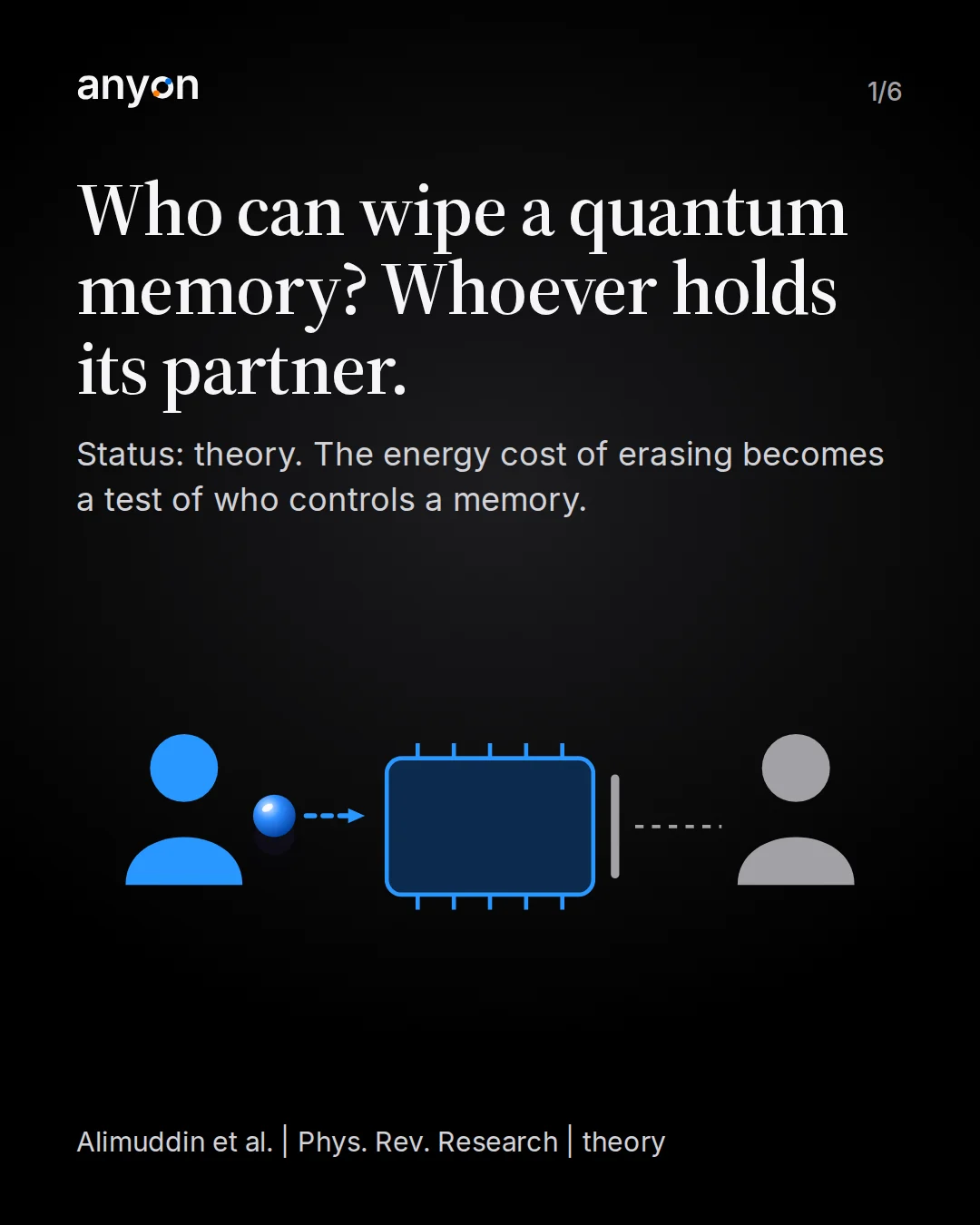
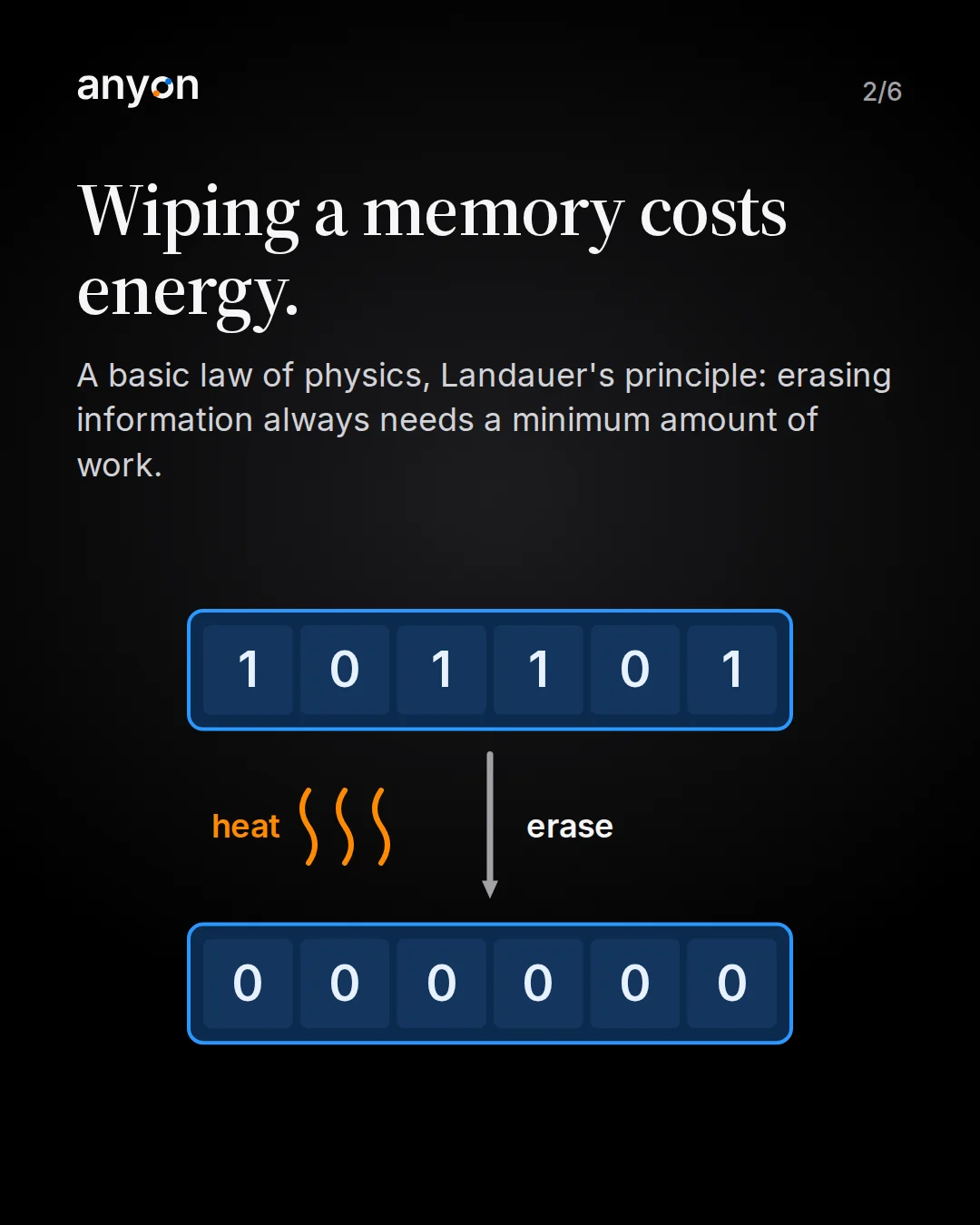
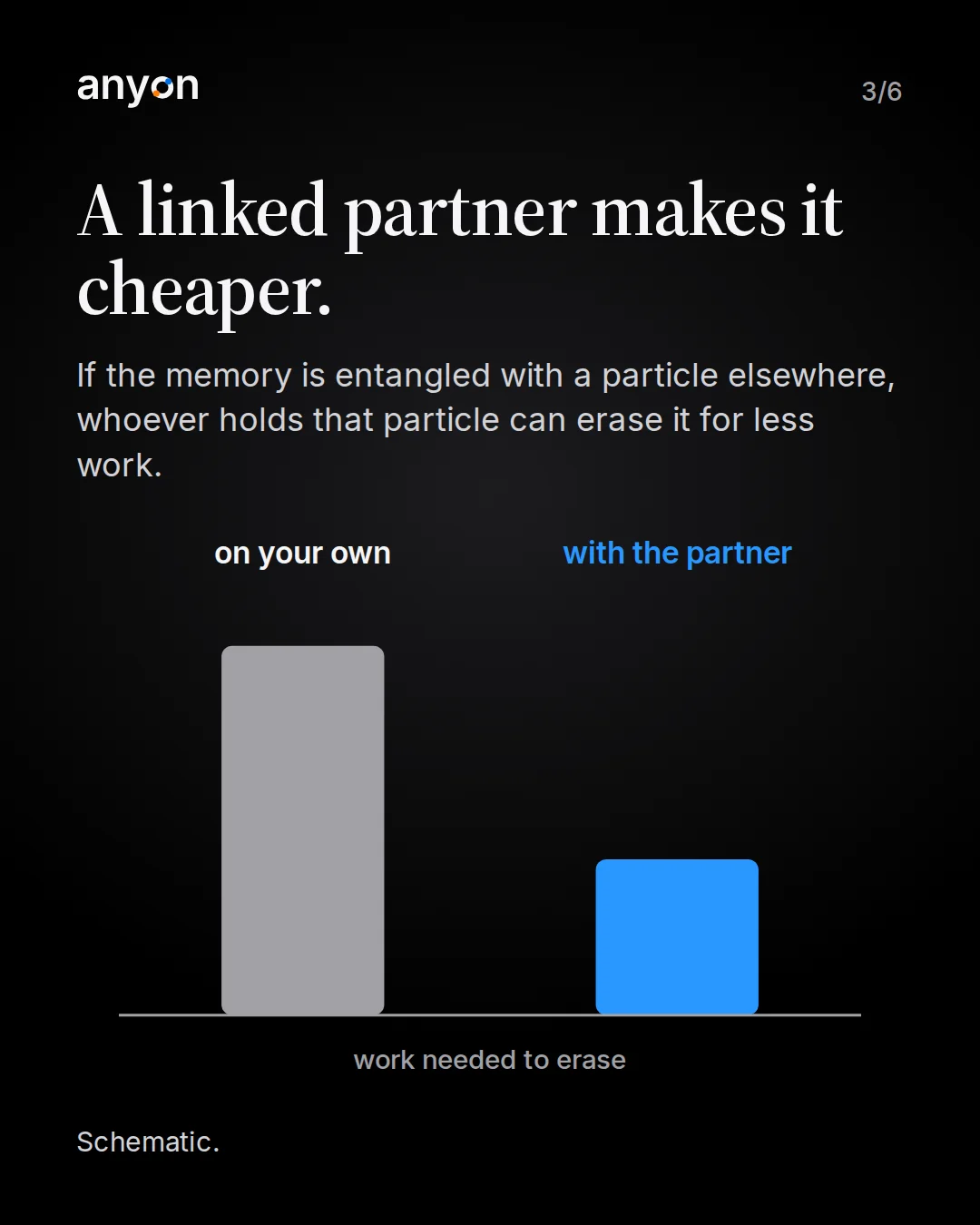
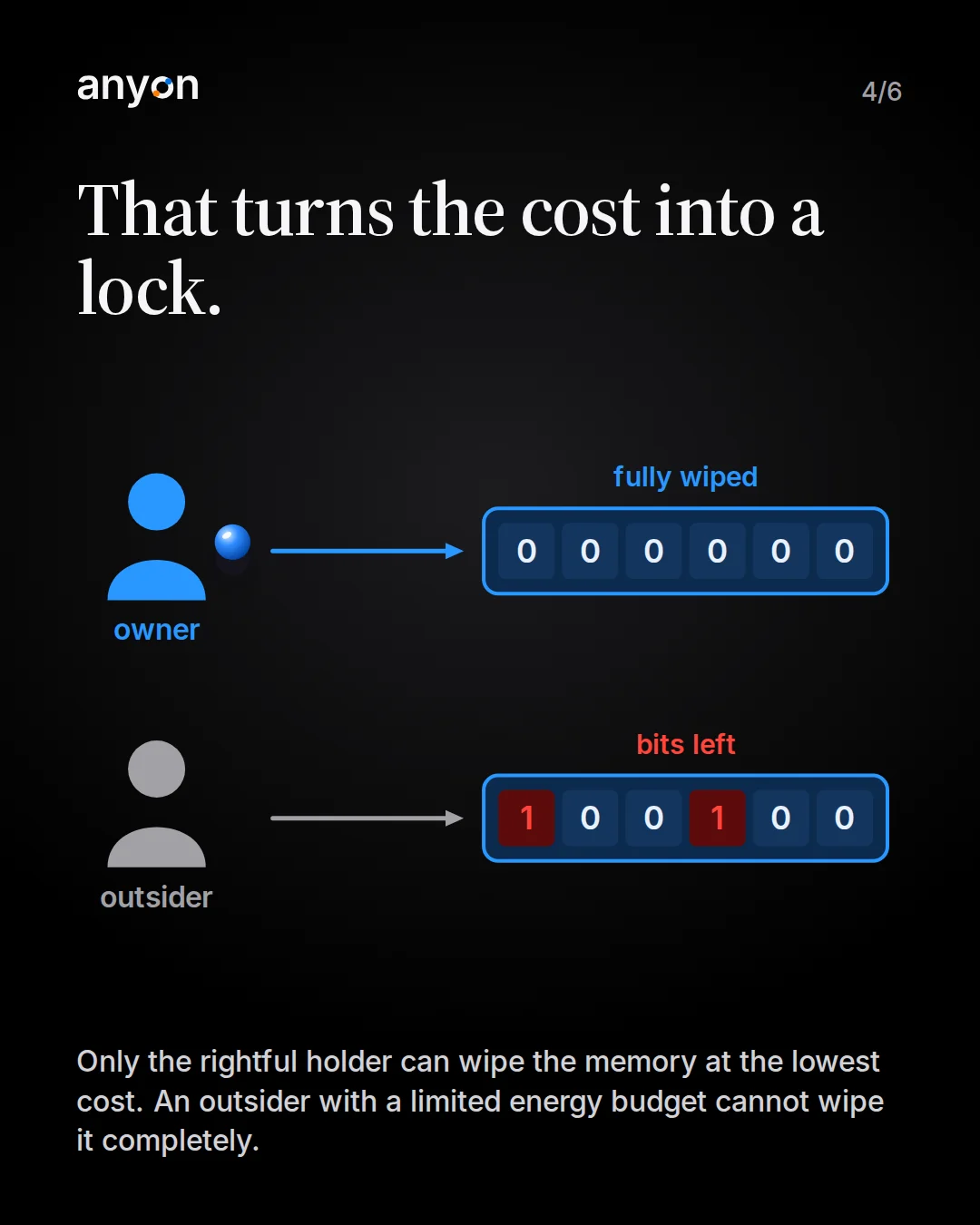
Wiping a memory always costs a little energy. That is a basic law of physics. Whoever holds a partner particle linked to the memory can wipe it more cheaply than anyone else. The authors turn this into a test of who really controls a quantum memory: only the rightful owner can wipe it at the lowest cost, and an outsider with a limited energy budget cannot wipe it completely. They also show how to run the test when the devices themselves cannot be trusted. It is theory.
A few papers like this every Monday, free.
Free, with sponsor ads. Unsubscribe anytime. Privacy
The details
What they did
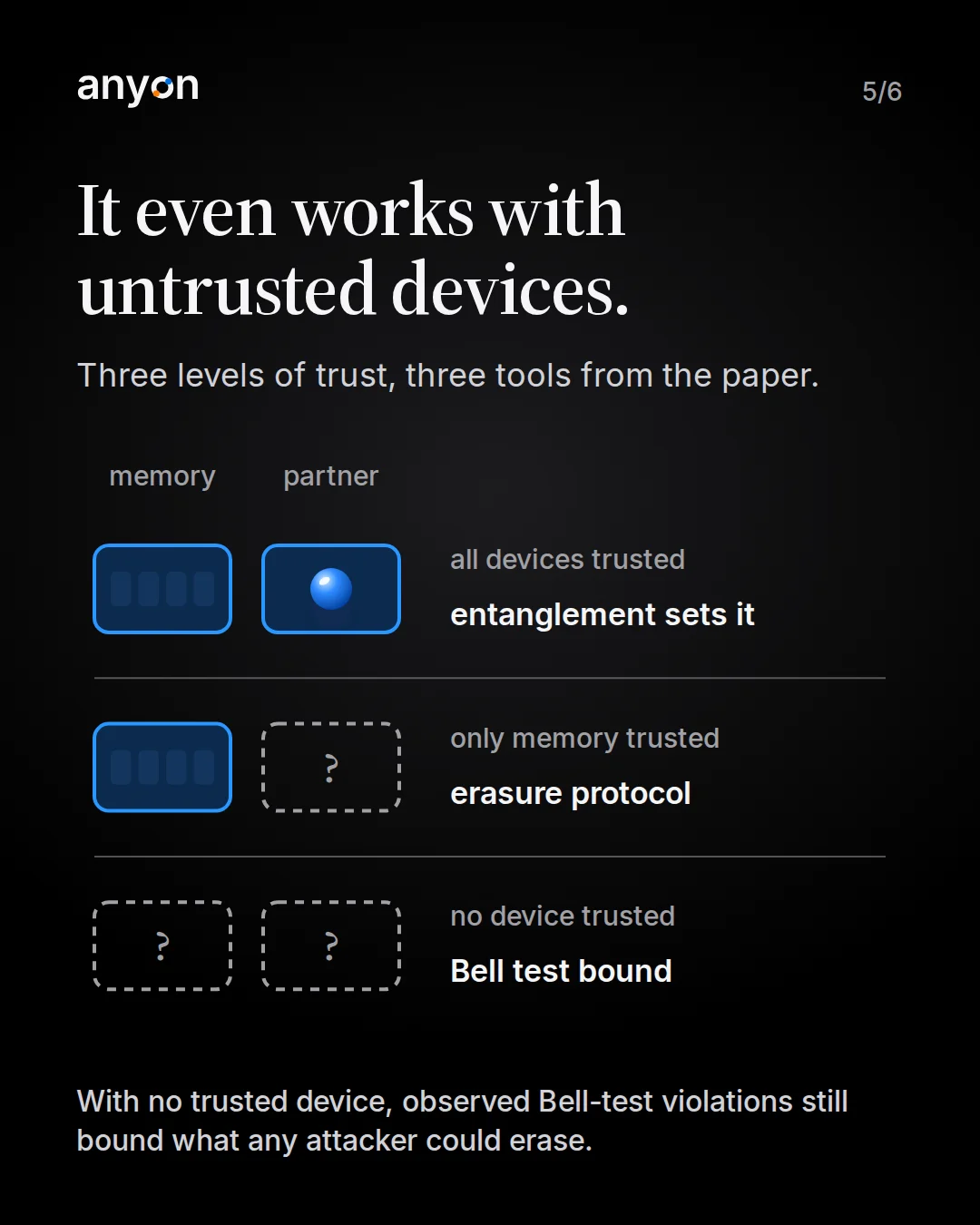
Landauer’s principle says erasing information costs energy. If the memory is correlated with a remote system, the holder of that system can erase more cheaply. The authors turn this into a security notion they call exclusive control (our inference on the exact term; the abstract’s formatting dropped the name): only a designated party should be able to erase at the minimal cost, and any adversary must fail. When the devices are trusted, the entanglement of formation exactly characterises this exclusivity. When only the memory holder’s device is trusted, they give an operational erasure protocol based on random dephasing and conditional operations. When no device is trusted, Bell nonlocality and self-testing turn observed violations into lower bounds on what any adversary could erase.
Why it matters
It links a thermodynamic quantity, the work cost of erasure, to a security property: the cost of erasing becomes a measure of exclusive control over a quantum memory, and an unauthorised party with a bounded energy budget cannot fully erase the information. This is theory.
What is still open
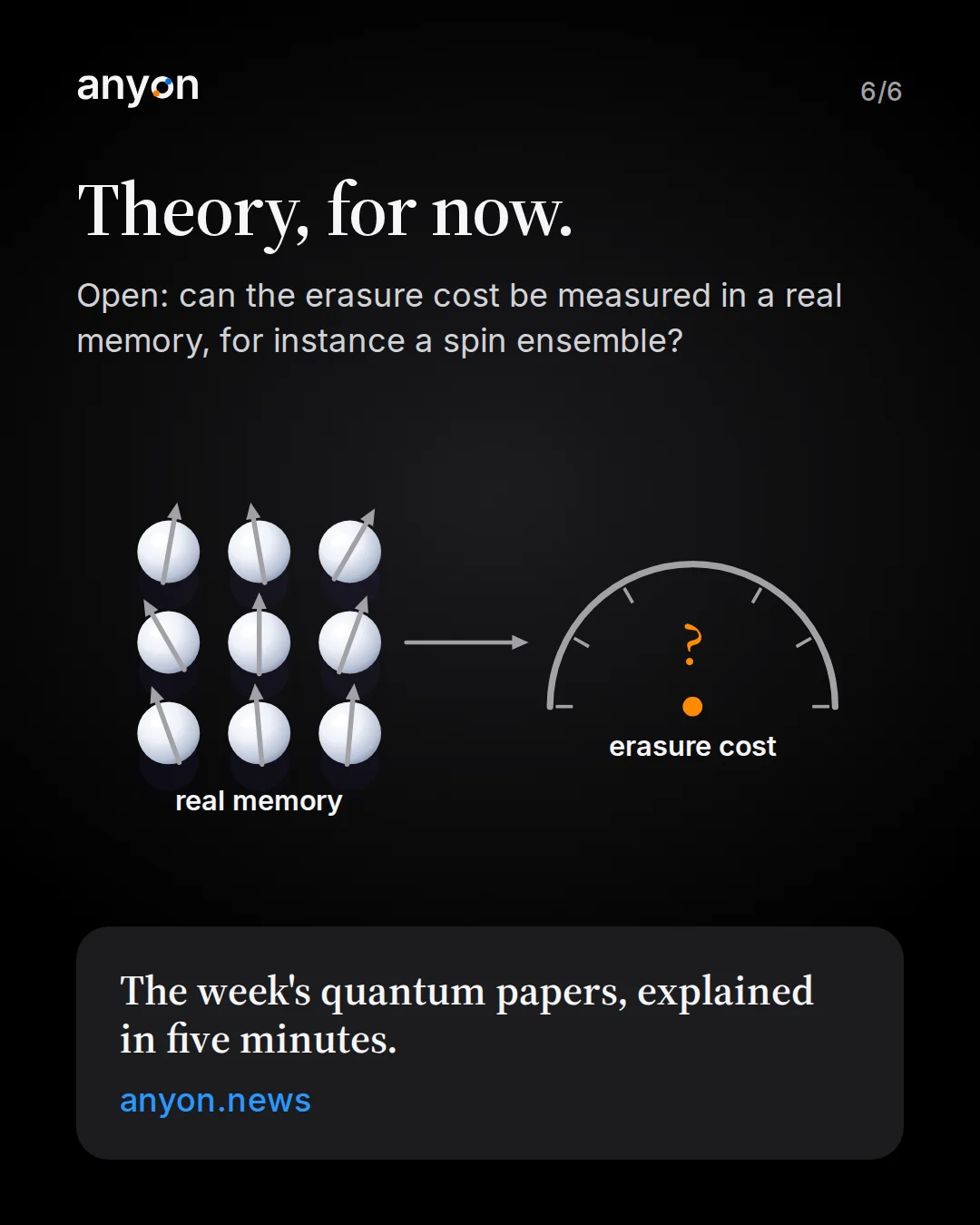
Could such an erasure cost be measured in a real memory, for instance a spin ensemble, with the energies involved? (our inference)