A trapped-ion processor runs error correction well below threshold
Our understanding
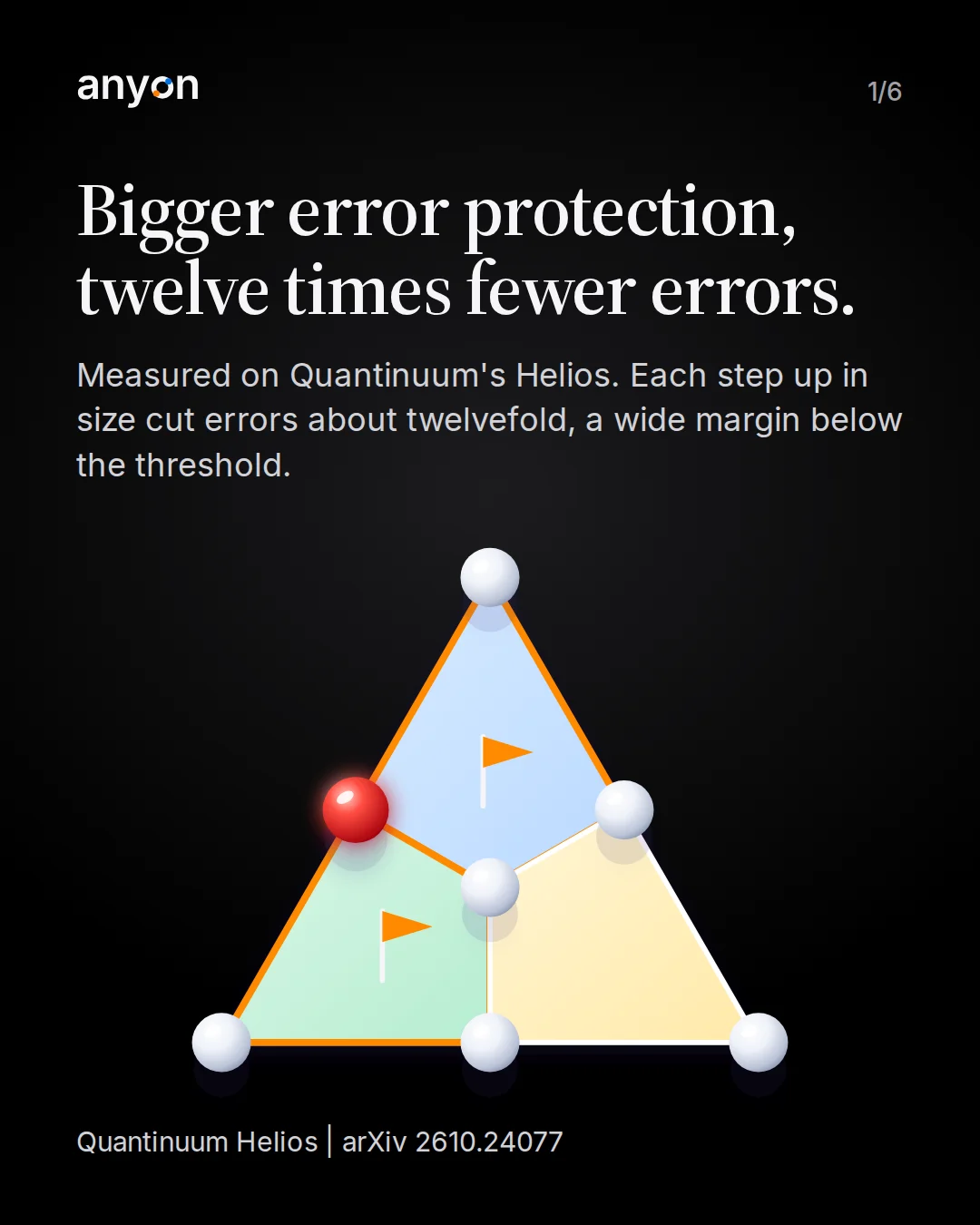
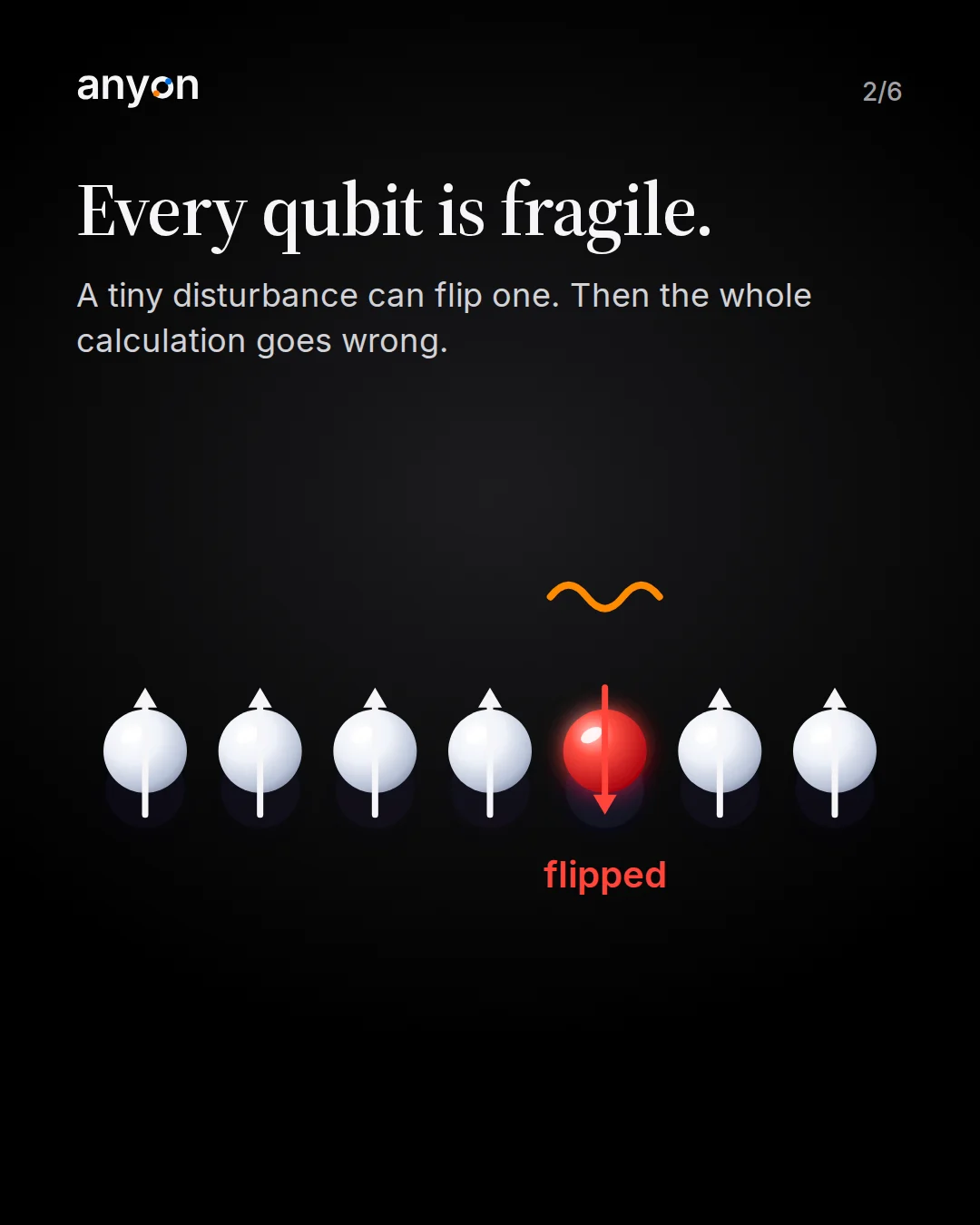
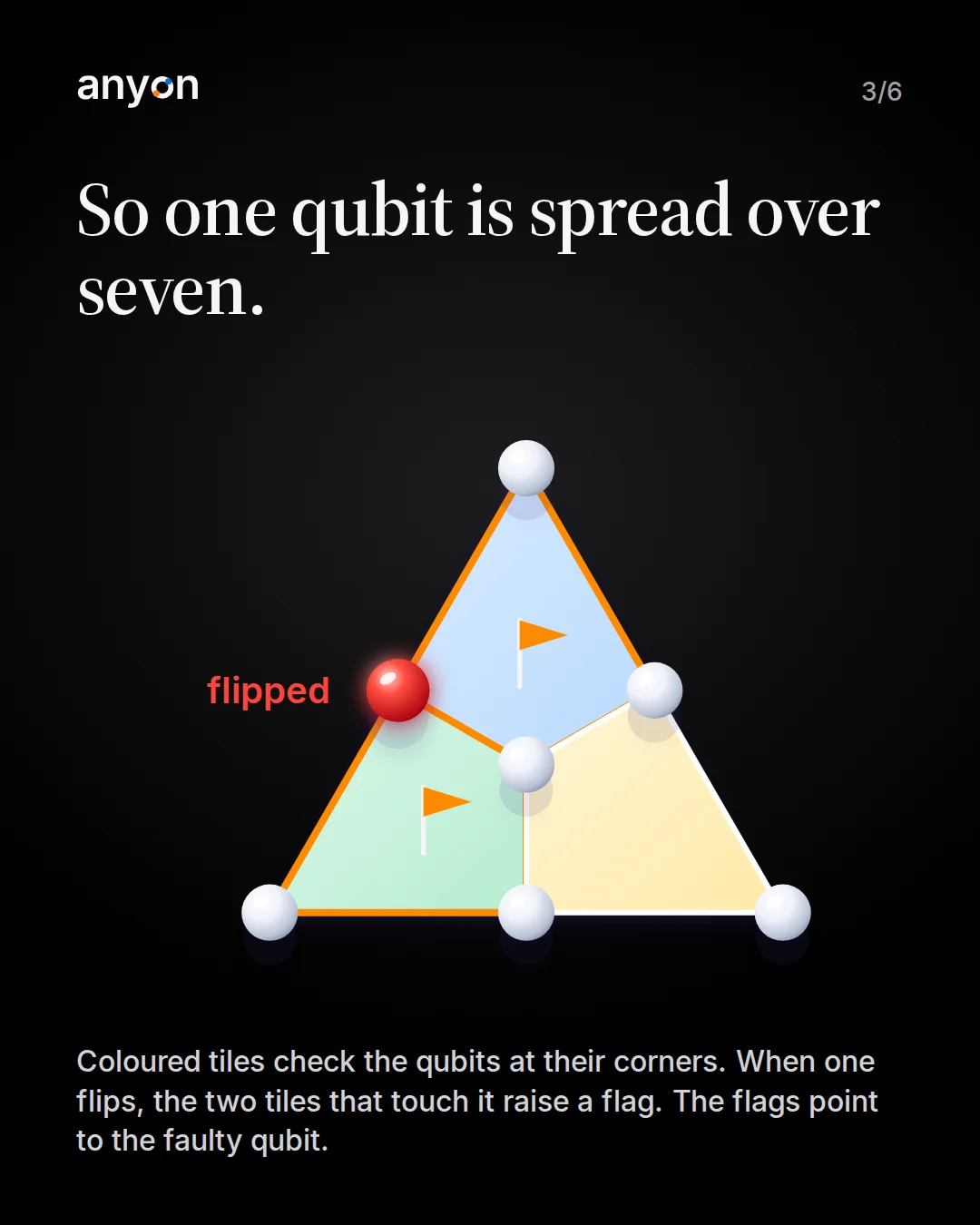
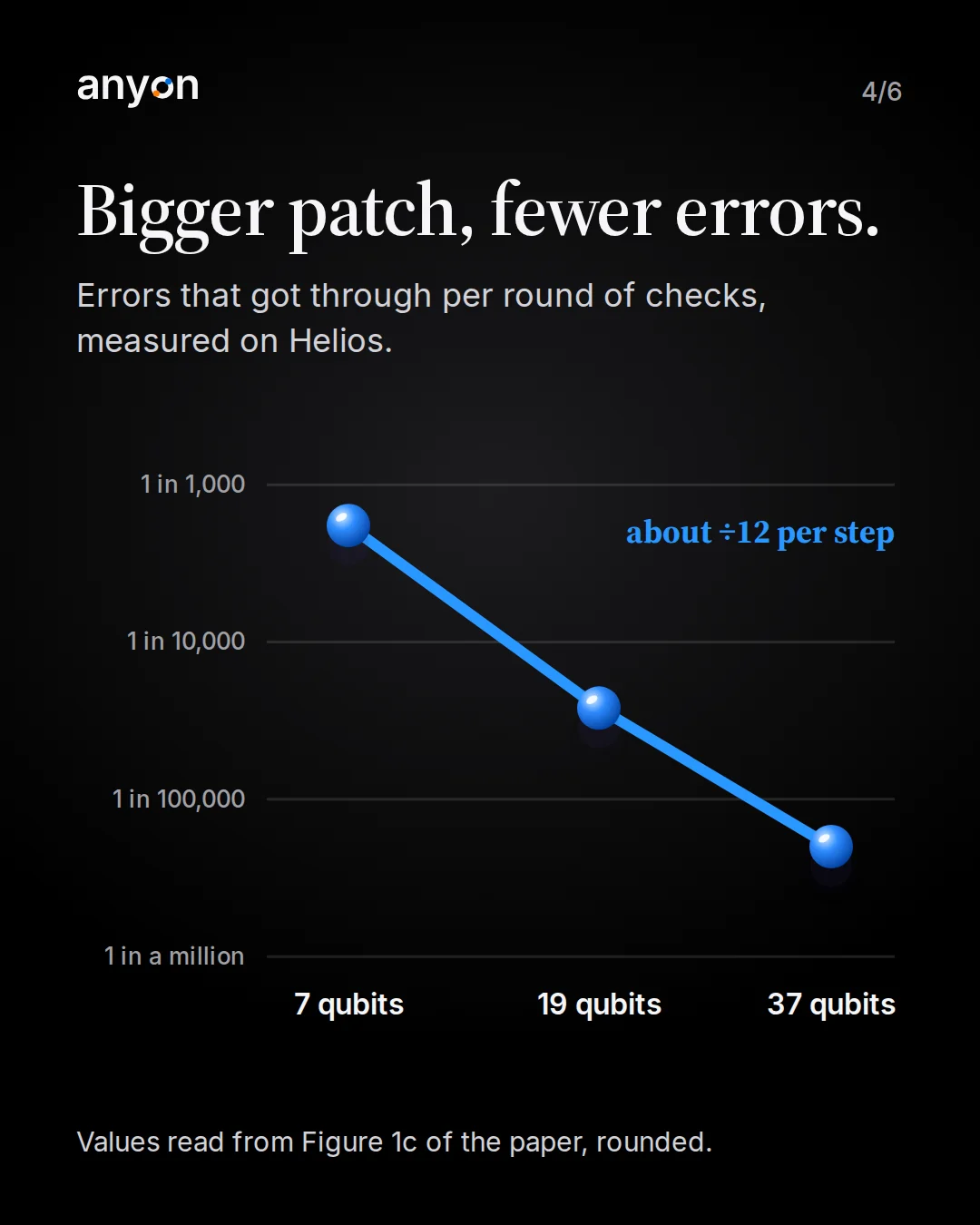
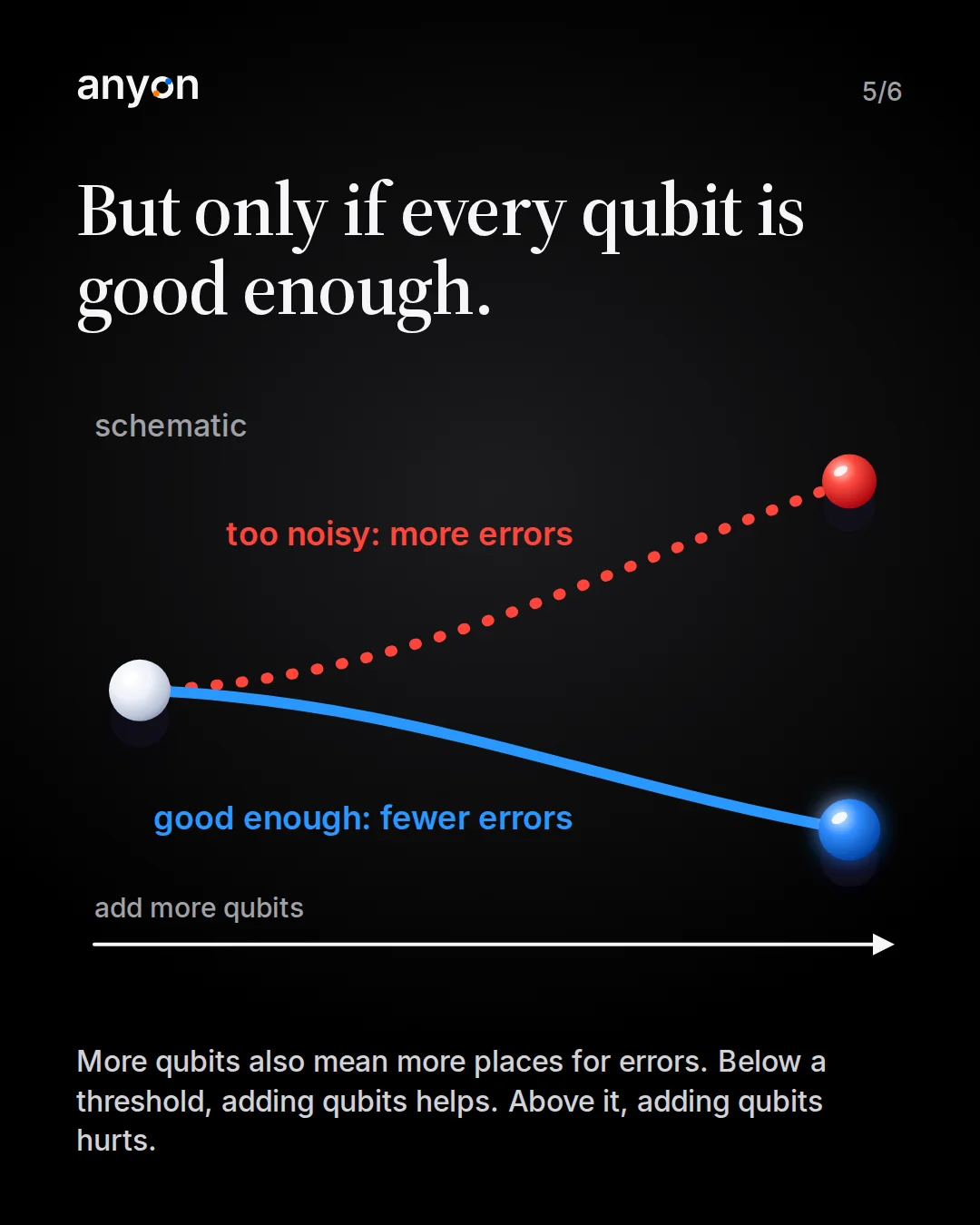
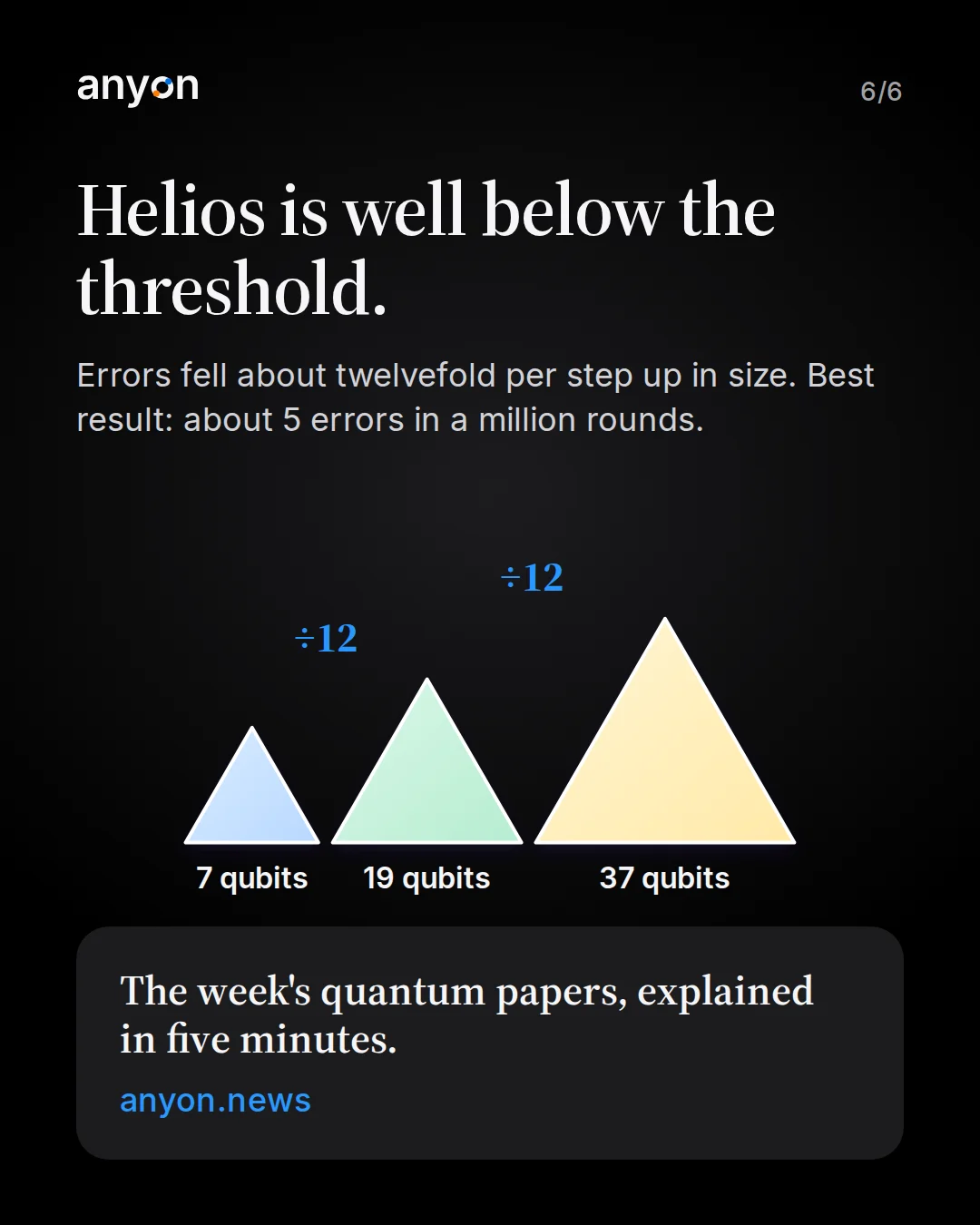
Quantum computers make mistakes. The fix is to spread each piece of information over many qubits, so that errors can be found and corrected. This only pays off if the hardware is already good enough, and on Quantinuum’s Helios machine it is. Each time the protection was made bigger, the remaining errors dropped about twelvefold. The best result was about 5 errors in a million rounds.
A few papers like this every Monday, free.
Free, with sponsor ads. Unsubscribe anytime. Privacy
The details
What they did
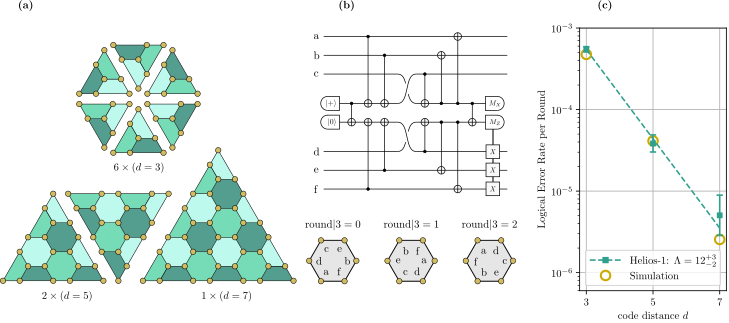
Quantum error correction only pays off once the hardware’s error rate is below a critical threshold; from then on, making the code bigger (a larger “distance”) suppresses logical errors exponentially. The team ran triangular colour codes at distances 3, 5 and 7 on Quantinuum’s Helios trapped-ion processor. With measures against leakage in both circuits and hardware, they reached logical error rates as low as 5 (+4/−2) × 10⁻⁶, and each step up in distance cut the logical error by a factor Λ = 12 (+3/−2). Encoded two-qubit Clifford operations at distance 5 reached a logical error of 7 (±3) × 10⁻⁵ with a suppression factor Λ = 9 (+8/−3). They compared standard decoders with neural-network decoders that decode in real time, an order of magnitude faster than the syndromes arrive.
Why it matters
A suppression factor of about 12 per distance step is a large margin below threshold, and the authors write that these rates approach what “megaquop-scale” computation needs, machines that run on the order of a million operations without a logical fault (our inference: the abstract uses the term without defining it). They also argue that scaled trapped-ion processors could reach useful performance with substantially smaller code blocks than previous results on other qubit types suggested.
What is still open
How do rate, suppression factor and decoder speed hold up when many logical qubits run in parallel and the machine grows? (our inference; the abstract does not state qubit counts beyond the code distances)