Spin qubits that leapfrog over each other
Our understanding
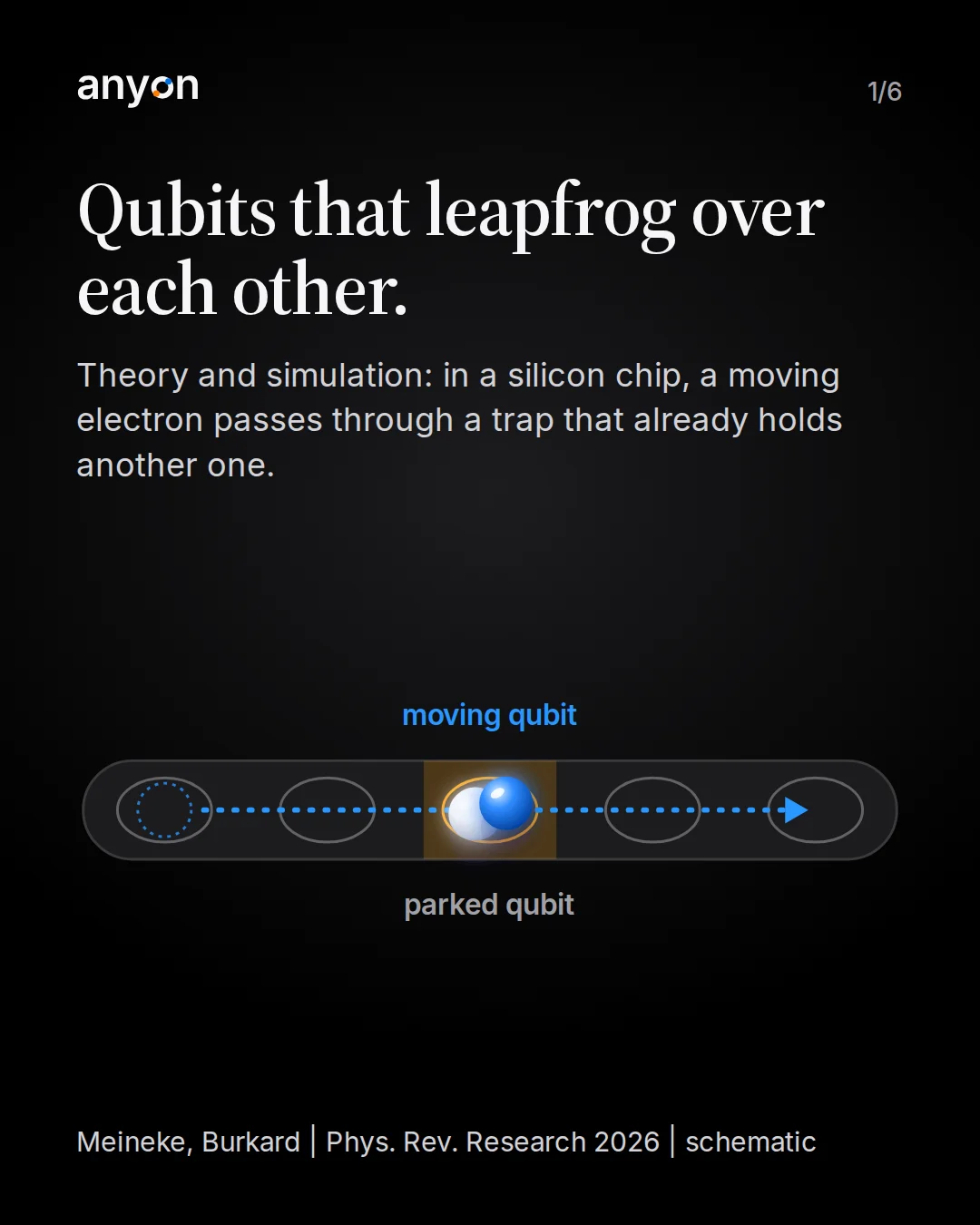
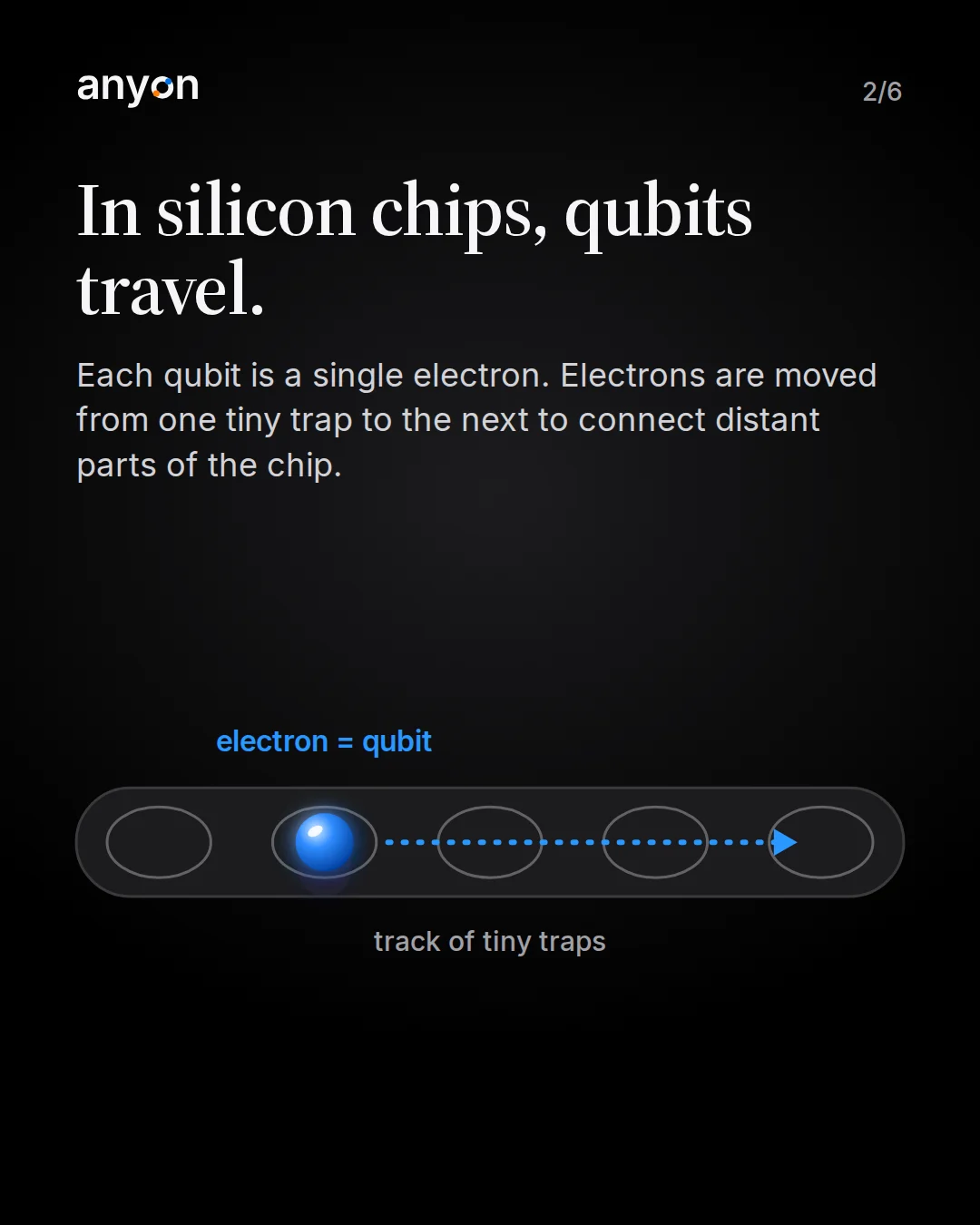
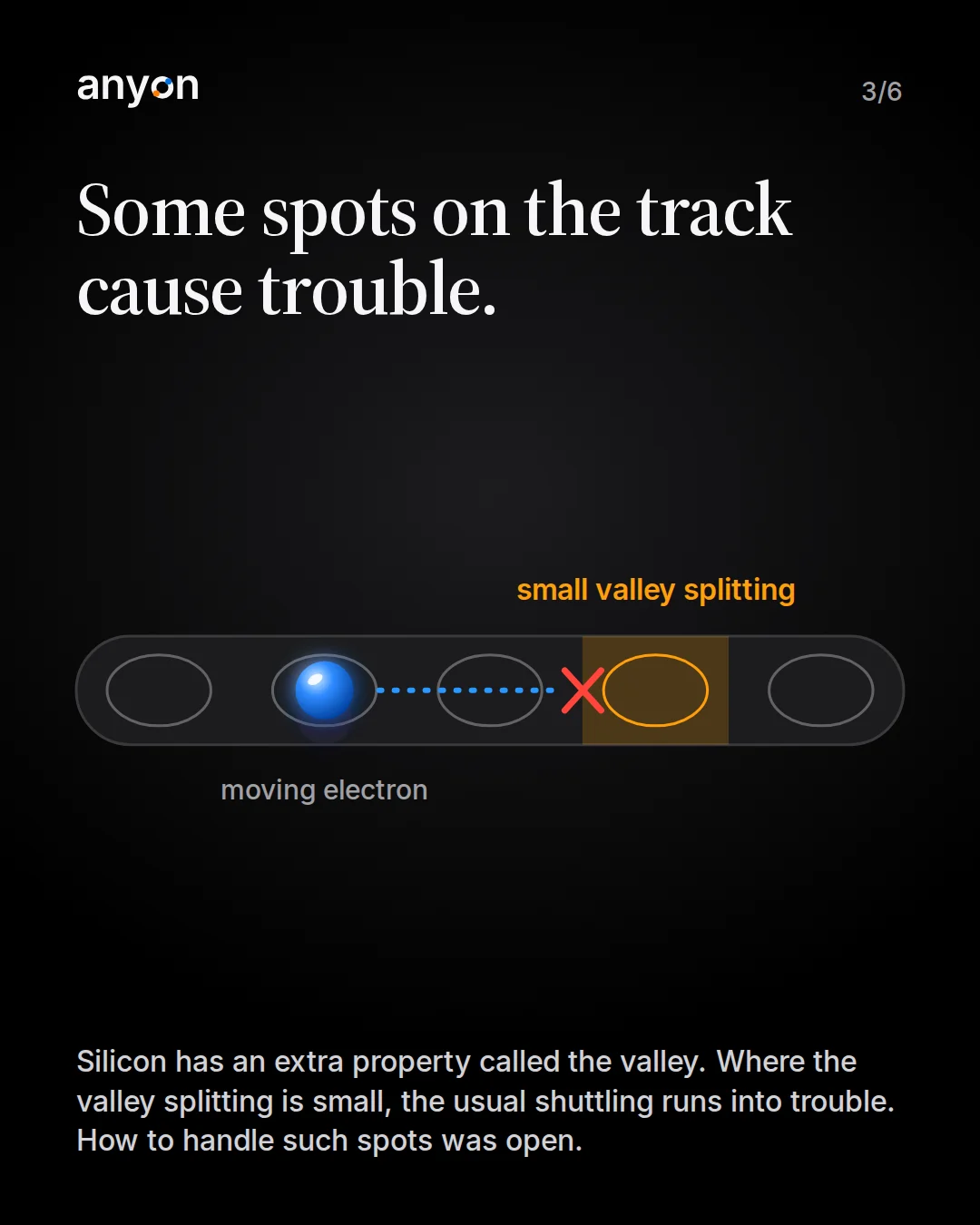
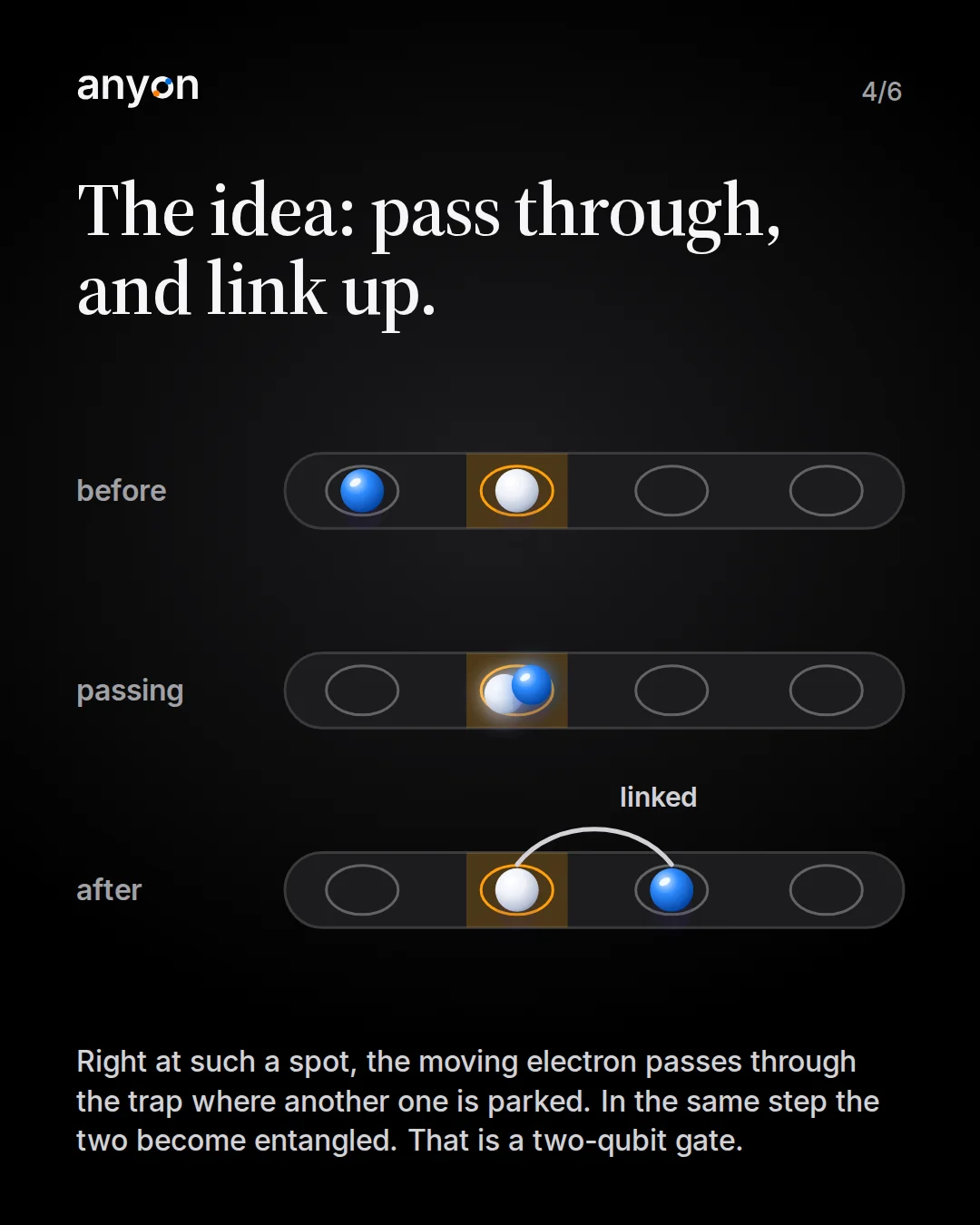
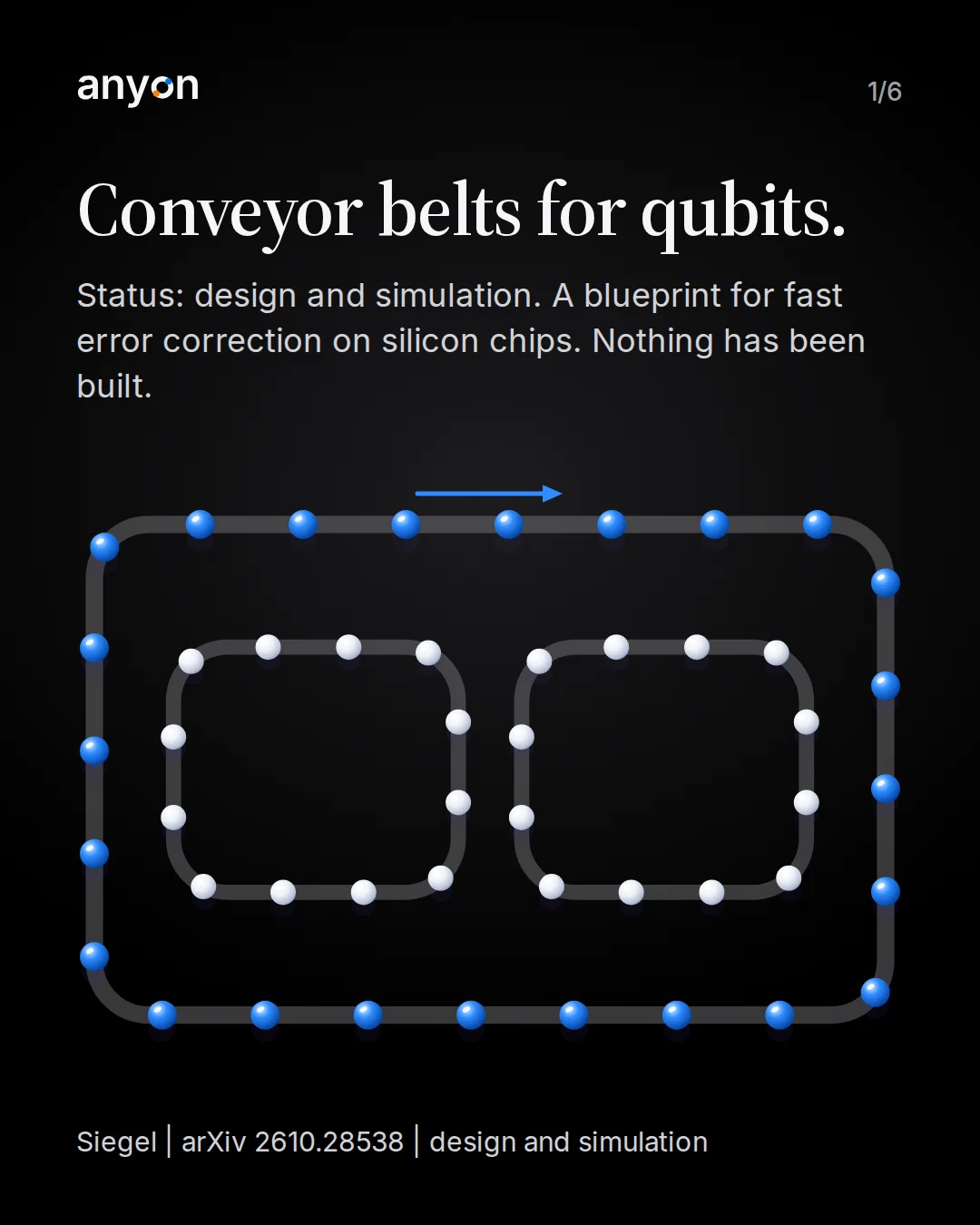
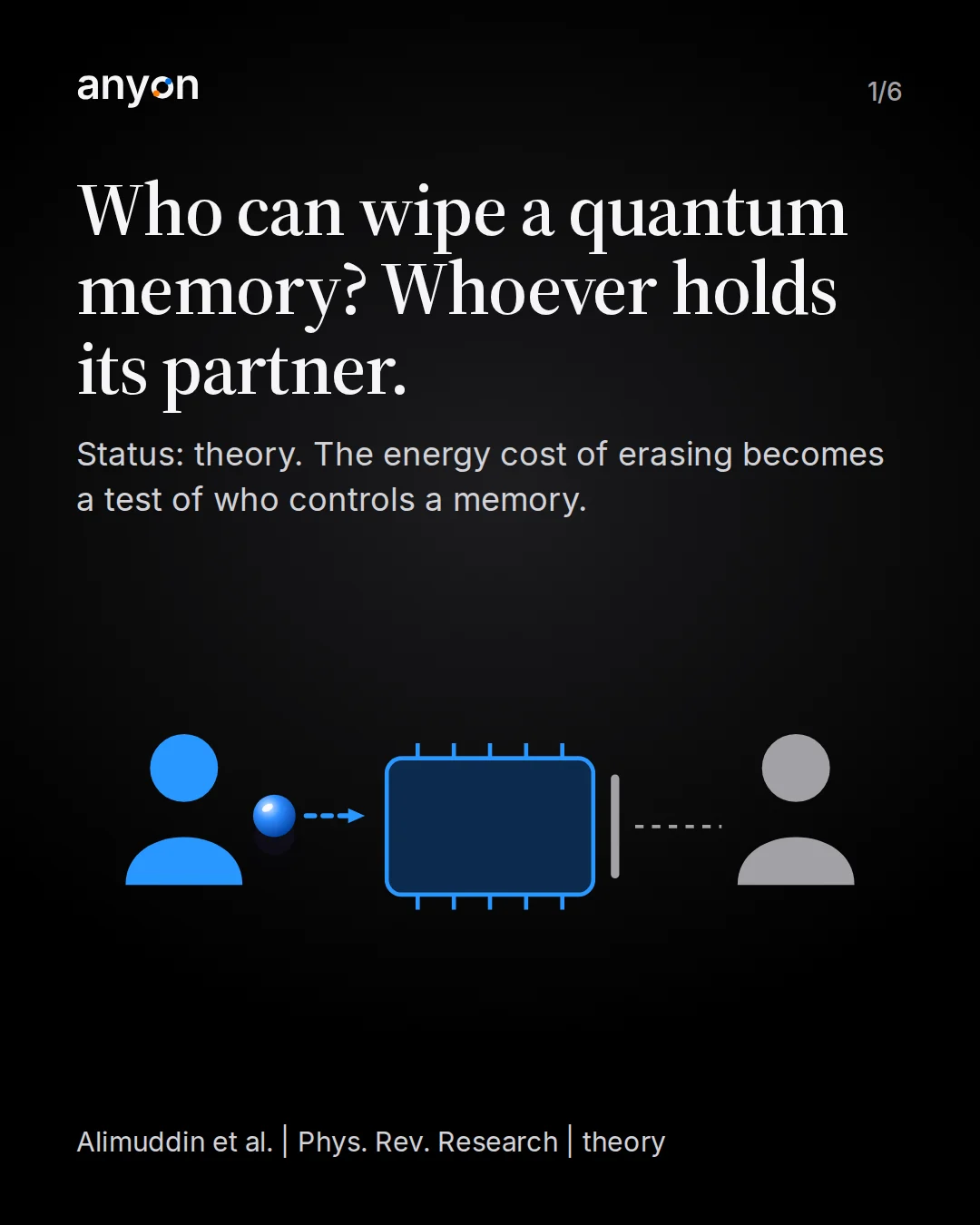
In silicon quantum chips, each qubit is a single electron, and electrons are moved along the chip like cars on a lane. Some spots on the chip are troublesome and are normally avoided. The authors show in simulations that a moving electron can hop over a parked one, right at such a spot. While it passes, the two electrons become linked, which is a basic step of quantum computing. Nobody has done this in a real chip yet.
A few papers like this every Monday, free.
Free, with sponsor ads. Unsubscribe anytime. Privacy
The details
What they did
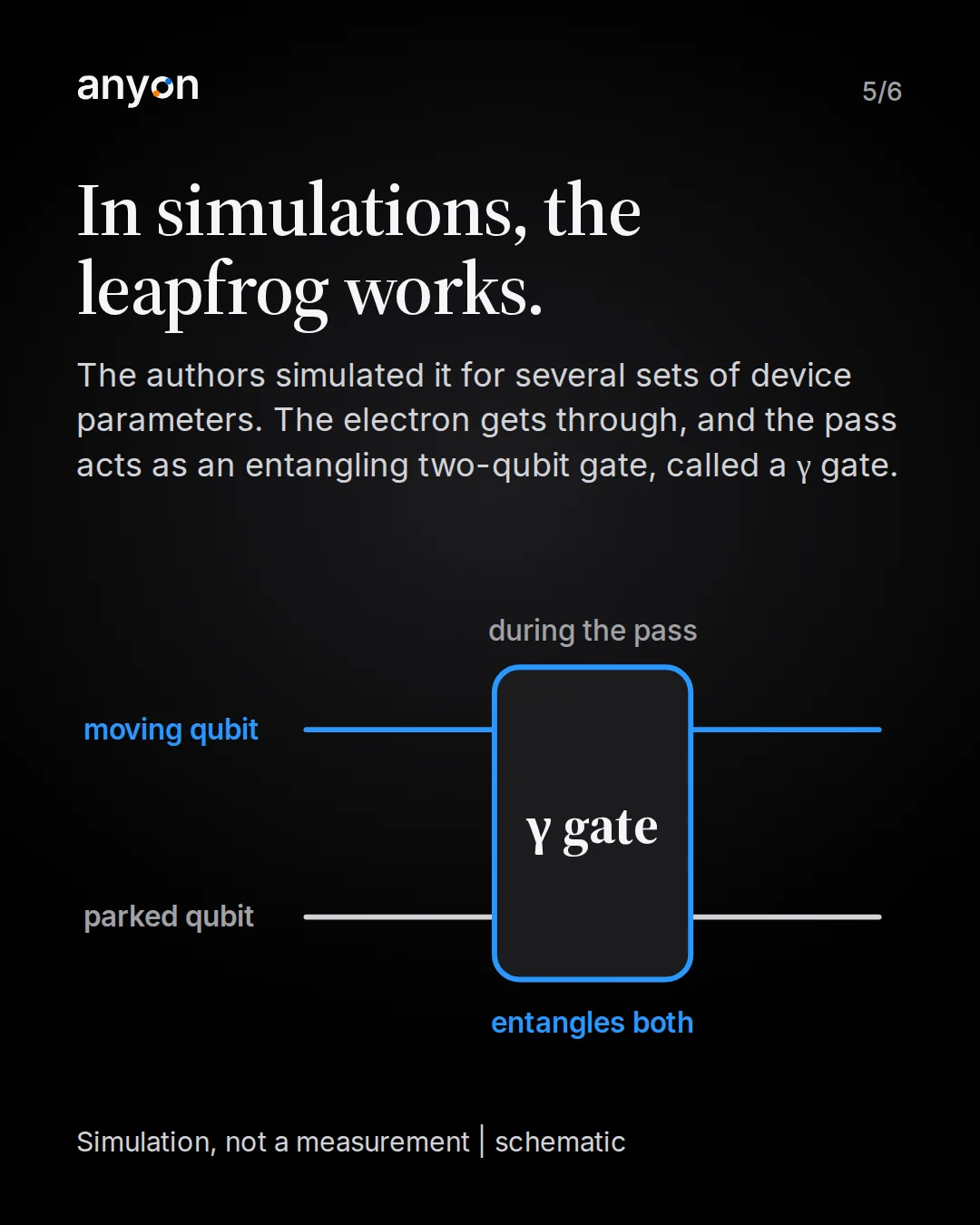
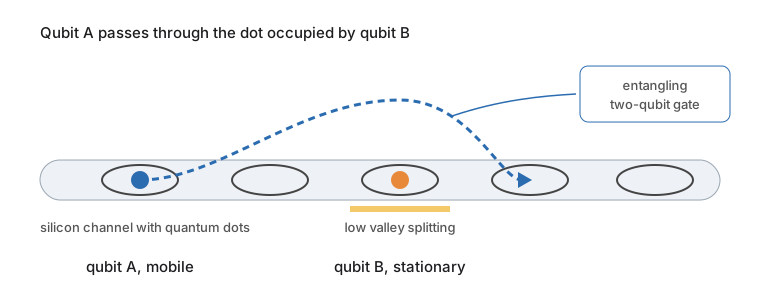
In silicon quantum chips, a qubit is a single electron’s spin, and electrons are moved across the chip (“shuttled”) to connect distant parts of the processor. Silicon has an extra quantum property called the valley degree of freedom; in regions where the “valley splitting” is small, the usual shuttling protocols run into trouble, and how to handle such regions has been an open problem. Instead of avoiding them, the authors propose using exactly this valley property to let a moving electron pass through a quantum dot that is already occupied by a stationary electron, hopping over it. In the same step the two electrons undergo an entangling two-qubit operation (a so-called γ gate). Simulations for several parameter sets show that the leapfrog is feasible.
Why it matters
It turns a weak spot of the chip into a feature: more routing paths for qubits, and a two-qubit gate without extra hardware, in regions that would otherwise be avoided.
What is still open
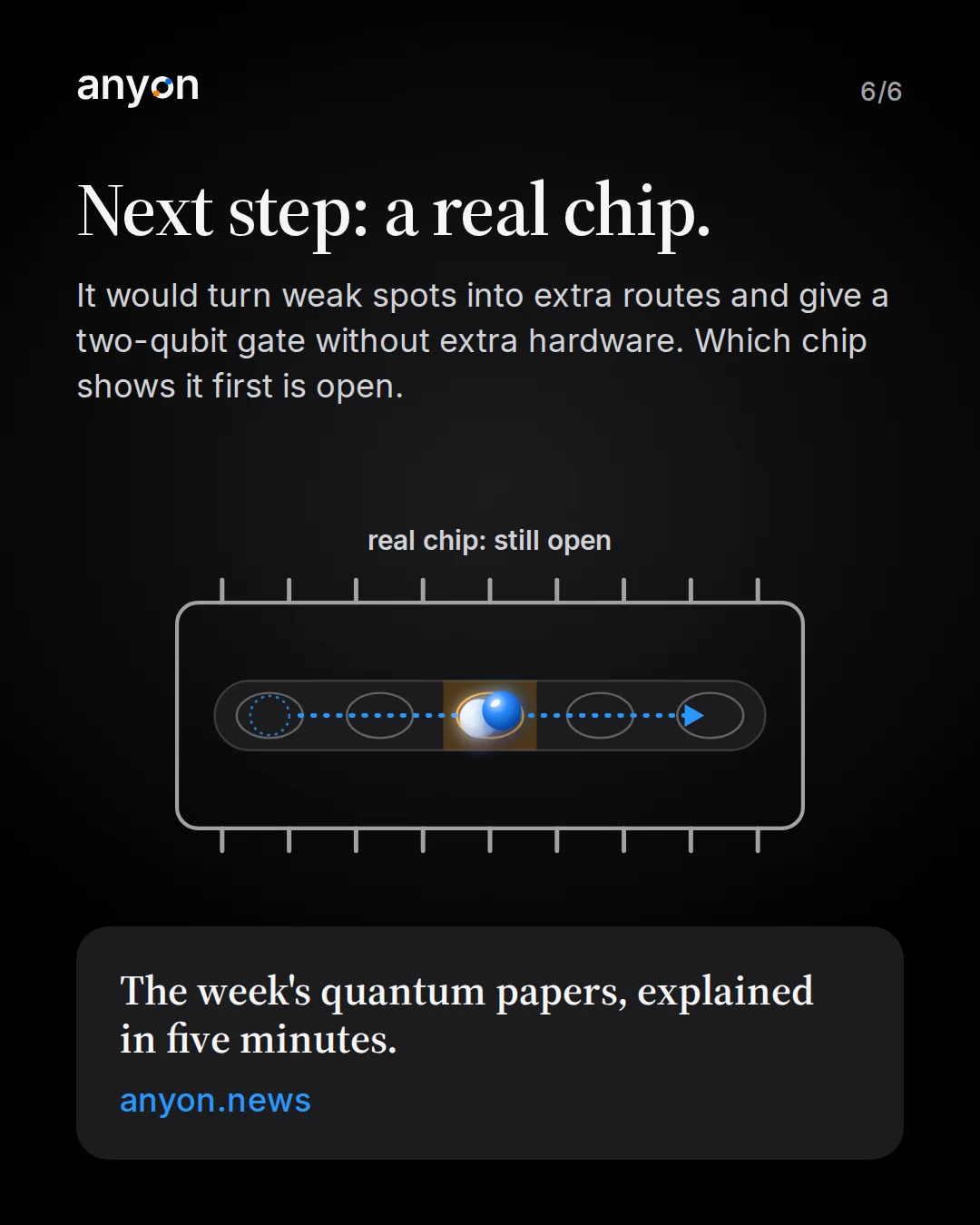
This is theory and simulation. Which device will show it first, and how robust is the leapfrog against the charge noise and valley-splitting variations of real silicon devices? (The robustness question is our inference; the abstract does not discuss noise.)